Ceramic coating services that protect your vehicle for years, not weeks—with hydrophobic protection that makes Florida sun, salt, and bird droppings a non-issue.
"I had my car treated with the ceramic coating and paint protection film from TIMO Detailing Services, and I couldn't be happier. The team was professional, efficient, and took the time to explain the process. My car looks amazing, and I no longer worry about minor scratches or bird droppings damaging my paint. Highly recommend!"
John D.
"I’m beyond impressed with the mobile detailing service I received from TIMO Detailing. They came to my home and worked on my SUV while I was at work. When I came back, it looked brand new inside and out. They really pay attention to the details and it’s clear they use high-quality products."
Sarah M.
"I’ve had my car detailed multiple times, but nothing compares to the quality of service provided by TIMO Detailing Services. Their paint protection film is top-notch and really helps protect my vehicle from the harsh elements. The team was courteous and thorough, and my car has never looked better."
Michael P.
"TIMO Detailing Services did a phenomenal job on my boat! The team applied a protective coating that made a huge difference, keeping the surfaces clean and easy to maintain. Plus, the shine is incredible. They’re definitely the go-to for all your detailing needs!"
Rachel F.
"I just had my RV detailed by TIMO Detailing Services, and the results exceeded my expectations. They treated both the interior and exterior, and everything looks fantastic. It’s like having a brand new RV again. I appreciate the attention to detail, especially when it comes to hard-to-reach areas."
James L.
"TIMO Detailing Services is the best in the business! I had their mobile detailing team come to my workplace and clean my car while I was in meetings. The entire experience was so easy and the results were amazing. My car hasn’t looked this good in years. I’ll definitely be a repeat customer."
Sophia G.
"I’ve tried a lot of different detailing services over the years, but TIMO Detailing Services stands out. Their customer service was top-notch, and the team went above and beyond to ensure my car was spotless. I opted for their ceramic coating service, and it made the paint on my car look like glass!"
David H.
"I cannot say enough good things about TIMO Detailing Services. They applied paint protection film to my luxury car, and the results are amazing. The film is invisible, and it has kept my vehicle’s paint free from chips and scratches. It’s a game-changer for maintaining my car’s value."
Olivia W.
"What an incredible experience! I had TIMO Detailing Services apply ceramic coating to my truck, and I’m so impressed. The process was quick, the team was professional, and the finish is just stunning. The hydrophobic properties make washing so much easier, and the car stays clean much longer."
Lucas B.
"TIMO Detailing Services did a fantastic job detailing the interior of my car. The team was thorough, cleaning every corner, vacuuming every surface, and conditioning the leather seats. I can’t believe how refreshed my car looks and smells! I will definitely be using them for regular maintenance."
Ella S.
"I had my motorcycle detailed by the team at TIMO Detailing Services, and I’m so happy with the results. They applied paint protection film and gave the bike a full exterior clean. The shine is amazing, and I don’t have to worry about scratches or chips anymore. Highly recommend them for any vehicle!"
George T.
"TIMO Detailing Services exceeded all my expectations. The mobile detailing team arrived on time, was incredibly professional, and did an amazing job. My car looks brand new again, both inside and out. They really take pride in their work, and it shows. I will be recommending them to all my friends and family."
Charlotte R.
Long-Term Paint Protection Apollo Beach
Stop Paying for Wax That Doesn't Last
You’re tired of waxing every few weeks just to watch it fade under the Florida sun. Ceramic coating gives you two to five years of protection instead of a couple months. That’s fewer trips to the shop, less money on repeat services, and actual defense against UV rays that cause fading and oxidation.
The difference is in the chemistry. A nano ceramic coating bonds to your paint at the molecular level, creating a 9H-rated barrier that repels water, resists chemicals, and shrugs off contaminants like tree sap and bug splatter. Wax sits on top and washes away. Ceramic coating becomes part of your clear coat.
You’ll notice it immediately when water beads off your hood instead of sitting there forming spots. You’ll see it when bird droppings wipe away without etching into your paint. And you’ll feel it every time you skip the detailer because your car still looks showroom-clean months later.
Mobile Ceramic Coating Apollo Beach
Veteran-Owned, Apollo Beach Based, Obsessively Thorough
We’ve been serving Apollo Beach and the surrounding Tampa Bay area since 2020. We’re a veteran-owned, family-run mobile detailing company that comes to your location—whether that’s your driveway, your office, or anywhere in our service radius.
We don’t rush jobs to hit a quota. If your paint needs an extra hour of correction before coating, we take that hour. If a panel isn’t prepped right, we start over. That’s not a selling point—it’s just how we work.
Apollo Beach vehicles face brutal conditions. Salt air from the bay, relentless UV exposure, and seasonal pollen that sticks like glue. We see it every day, and we know what it takes to protect against it. That’s why ceramic coating isn’t just an upsell here—it’s the most effective long-term solution we can offer you.
Ceramic Coating Application Process Florida
Here's What Happens When We Coat Your Vehicle
First, we assess your paint. If there are swirl marks, light scratches, or oxidation, we handle full paint correction before any coating goes on. Ceramic coating doesn’t hide imperfections—it locks them in. So we make sure your surface is flawless first.
Next comes the prep. We decontaminate every panel, strip old wax or sealants, and use an isopropyl alcohol wipe-down to ensure zero oils or residue. The coating needs a chemically clean surface to bond properly. Skipping this step is where most cheap jobs fail.
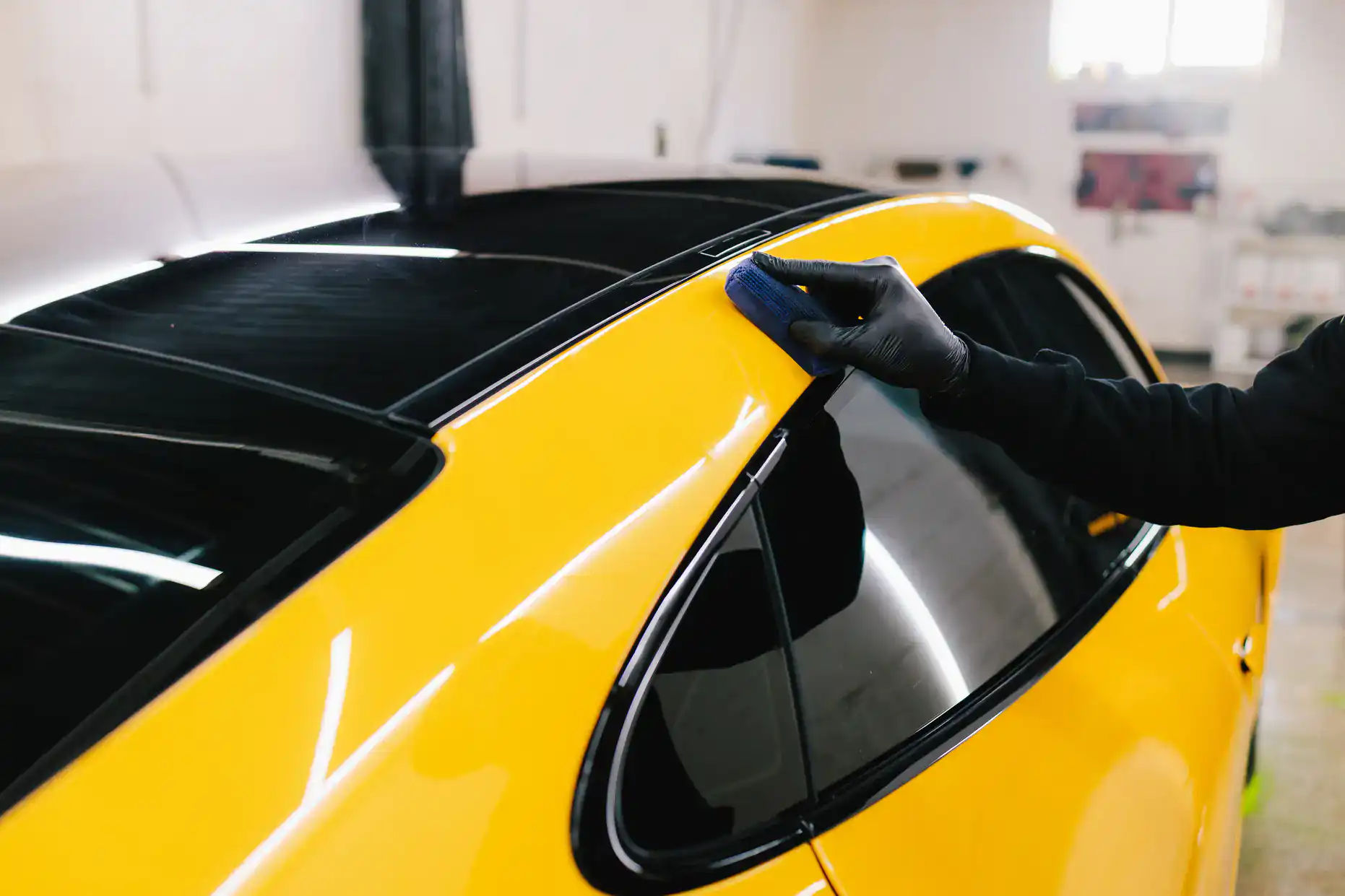
Then we apply the ceramic coating layer by layer. We work in controlled conditions, applying the product to small sections at a time, letting it flash, then buffing to a high-gloss finish. Depending on the package you choose, this can mean multiple layers for added thickness and durability.
After application, the coating needs time to cure. We’ll give you specific instructions on when you can wash it, when to avoid rain, and how to maintain it for maximum lifespan. Most coatings fully cure within 48 hours, but we’ll walk you through your exact timeline.
You’re getting a paint sealant alternative that outperforms traditional wax in every measurable way. Hydrophobic protection means water slides off at a 110-degree contact angle, taking dirt and grime with it. Chemical resistance protects against acidic rain, salt spray, and the corrosive bird droppings that are everywhere in Apollo Beach.
UV protection is critical here. Florida sun doesn’t just fade your paint—it breaks down the clear coat over time, leading to oxidation and expensive repaints. Ceramic coating blocks harmful rays and keeps your finish vibrant for years, even under the kind of direct sunlight we get in Tampa Bay.
We also coat more than just paint. Wheels, glass, and exterior plastics all benefit from the same hydrophobic barrier. That means easier cleaning across your entire vehicle, not just the hood and doors. And because we’re mobile, this all happens at your home or office while you go about your day.
You’ll choose from packages ranging from three-year protection to five-year or longer, depending on your goals and budget. We also offer add-ons like leather coating for your interior and wheel-specific coatings for brake dust protection. Every package includes full paint correction and meticulous surface prep—that’s not optional.
How long does ceramic coating actually last in Florida's climate?
A quality ceramic coating lasts between two and five years in Florida, depending on the product grade and how well you maintain it. The key factors are UV exposure, how often you wash your car, and whether you’re using pH-neutral soap instead of harsh chemicals that can degrade the coating over time.
In Apollo Beach specifically, you’re dealing with salt air, high humidity, and intense sun. Those conditions are tough on any protective layer, but ceramic coating is designed for exactly this kind of environment. It won’t break down like wax, which only lasts a few weeks before you’re reapplying.
To get the most life out of your coating, wash your vehicle every two to four weeks and avoid automatic car washes with stiff brushes. Hand washing or touchless washes are your best bet. We’ll give you a full maintenance guide after application so you know exactly how to protect your investment.
Is ceramic coating worth the cost compared to regular waxing?
If you’re waxing every month or two, you’re spending $50 to $150 per application depending on where you go. Over three years, that’s $1,800 to $5,400. A ceramic coating costs more upfront—often over $1,000—but it lasts the entire three to five years without reapplication.
Beyond cost, ceramic coating performs better. Wax provides minimal scratch resistance and almost no chemical protection. It also requires you to keep scheduling appointments, taking time out of your week, and hoping the results last more than a few washes.
Ceramic coating gives you hydrophobic protection, UV resistance, and a hardness rating that helps prevent swirl marks and light scratches. You’re not just saving money—you’re getting a higher level of protection that actually keeps your paint in better condition long-term. For most people, that math makes sense.
Can ceramic coating be applied to any vehicle or paint type?
Yes, ceramic coating works on any factory paint, whether it’s a brand-new car, a ten-year-old truck, or a classic you’ve been restoring. The coating bonds to the clear coat, so as long as your vehicle has a clear coat layer, it’s a candidate.
That said, older paint or heavily damaged paint needs correction first. If your clear coat is failing, peeling, or severely oxidized, we’ll need to address that before applying any coating. Ceramic coating doesn’t repair paint—it protects what’s already there. So we make sure your surface is in good shape before we lock it in.
We also apply ceramic coating to wheels, glass, and exterior plastics. Each surface gets a slightly different prep process, but the result is the same: a slick, hydrophobic layer that repels contaminants and makes cleaning easier. If you’re unsure whether your vehicle is a good fit, we’ll assess it before quoting you a price.
What's the difference between a 3-year and 5-year ceramic coating?
The main difference is the formulation and the number of layers applied. A 5-year coating typically uses a more advanced product with higher silica content and self-healing properties, meaning light scratches can disappear with heat from the sun or warm water.
Five-year coatings also involve more prep work and additional layers during application. That means more time, more product, and a thicker protective barrier. The result is longer durability and better resistance to environmental damage, especially in harsh climates like Apollo Beach where salt and UV exposure are constant.
A 3-year coating still gives you excellent protection—it’s not a lesser product, just a different tier. For most daily drivers, a 3-year coating is more than enough. If you’re protecting a high-end vehicle, a show car, or something you plan to keep pristine for resale, the 5-year option makes more sense. We’ll help you decide based on your goals and how you use your vehicle.
How soon can I wash my car after ceramic coating is applied?
You’ll need to wait at least 48 hours before washing your vehicle, and ideally a full week before exposing it to heavy rain or an automatic car wash. The coating needs time to fully cure and bond to your paint. Washing too soon can disrupt that process and reduce the coating’s effectiveness.
During the curing period, avoid parking under trees where sap or bird droppings might land on your car. If something does hit your paint, don’t wipe it off—let it sit until the curing window is over. We know that sounds counterintuitive, but disturbing the coating before it’s fully hardened can cause streaking or uneven coverage.
After the first week, you’re good to wash as normal. Stick with pH-neutral soap and microfiber towels or a touchless wash if possible. Avoid harsh chemicals, abrasive sponges, and automatic washes with brushes. We’ll give you a detailed care sheet with exact timelines and product recommendations so there’s no guesswork.
Does ceramic coating prevent rock chips and deep scratches?
No, ceramic coating won’t stop rock chips or deep scratches caused by impacts. It’s not a physical barrier like paint protection film (PPF)—it’s a chemical bond that adds hardness to your clear coat and makes your paint more resistant to light scratches, swirl marks, and surface-level damage.
What it does prevent is the kind of damage you get from washing, daily driving, and environmental exposure. Things like fine scratches from improper drying, etching from bird droppings, and water spots from mineral deposits. The 9H hardness rating means your paint can handle more abuse before showing wear.
If you’re looking for protection against rock chips—especially on the front bumper, hood, or mirrors—paint protection film is a better option. Some people combine both: PPF on high-impact areas and ceramic coating on the rest of the vehicle. That gives you the best of both worlds, but it’s a bigger investment. We can walk you through what makes sense for your situation.