Your Paint Doesn't Stand a Chance Without Protection
Florida sun, salt air, and daily contaminants are breaking down your clear coat right now. Ceramic coating services create a 9H hardness shield that actually lasts.
"I had my car treated with the ceramic coating and paint protection film from TIMO Detailing Services, and I couldn't be happier. The team was professional, efficient, and took the time to explain the process. My car looks amazing, and I no longer worry about minor scratches or bird droppings damaging my paint. Highly recommend!"
John D.
"I’m beyond impressed with the mobile detailing service I received from TIMO Detailing. They came to my home and worked on my SUV while I was at work. When I came back, it looked brand new inside and out. They really pay attention to the details and it’s clear they use high-quality products."
Sarah M.
"I’ve had my car detailed multiple times, but nothing compares to the quality of service provided by TIMO Detailing Services. Their paint protection film is top-notch and really helps protect my vehicle from the harsh elements. The team was courteous and thorough, and my car has never looked better."
Michael P.
"TIMO Detailing Services did a phenomenal job on my boat! The team applied a protective coating that made a huge difference, keeping the surfaces clean and easy to maintain. Plus, the shine is incredible. They’re definitely the go-to for all your detailing needs!"
Rachel F.
"I just had my RV detailed by TIMO Detailing Services, and the results exceeded my expectations. They treated both the interior and exterior, and everything looks fantastic. It’s like having a brand new RV again. I appreciate the attention to detail, especially when it comes to hard-to-reach areas."
James L.
"TIMO Detailing Services is the best in the business! I had their mobile detailing team come to my workplace and clean my car while I was in meetings. The entire experience was so easy and the results were amazing. My car hasn’t looked this good in years. I’ll definitely be a repeat customer."
Sophia G.
"I’ve tried a lot of different detailing services over the years, but TIMO Detailing Services stands out. Their customer service was top-notch, and the team went above and beyond to ensure my car was spotless. I opted for their ceramic coating service, and it made the paint on my car look like glass!"
David H.
"I cannot say enough good things about TIMO Detailing Services. They applied paint protection film to my luxury car, and the results are amazing. The film is invisible, and it has kept my vehicle’s paint free from chips and scratches. It’s a game-changer for maintaining my car’s value."
Olivia W.
"What an incredible experience! I had TIMO Detailing Services apply ceramic coating to my truck, and I’m so impressed. The process was quick, the team was professional, and the finish is just stunning. The hydrophobic properties make washing so much easier, and the car stays clean much longer."
Lucas B.
"TIMO Detailing Services did a fantastic job detailing the interior of my car. The team was thorough, cleaning every corner, vacuuming every surface, and conditioning the leather seats. I can’t believe how refreshed my car looks and smells! I will definitely be using them for regular maintenance."
Ella S.
"I had my motorcycle detailed by the team at TIMO Detailing Services, and I’m so happy with the results. They applied paint protection film and gave the bike a full exterior clean. The shine is amazing, and I don’t have to worry about scratches or chips anymore. Highly recommend them for any vehicle!"
George T.
"TIMO Detailing Services exceeded all my expectations. The mobile detailing team arrived on time, was incredibly professional, and did an amazing job. My car looks brand new again, both inside and out. They really take pride in their work, and it shows. I will be recommending them to all my friends and family."
Charlotte R.
Nano Ceramic Coating Beach Park
Protection That Outlasts Wax by Years, Not Weeks
You’re tired of waxing every few months just to watch it fade after three car washes. That’s not protection, that’s maintenance you don’t have time for.
Nano ceramic coating bonds directly to your paint at a molecular level. The result is a permanent layer that repels water, resists UV damage, and shrugs off the bird droppings and tree sap that would normally etch into your clear coat. We’re talking about hydrophobic protection that beads water off your hood like it hit a hot pan.
Your car stays cleaner between washes. When you do wash it, contaminants slide off instead of requiring scrubbing that creates swirl marks. The deep gloss you get isn’t temporary shine, it’s how your paint looks when it’s actually protected from oxidation and environmental fallout.
This isn’t about making your car look good for a weekend. It’s about stopping the damage that’s already happening and preventing the expensive paint correction you’ll need if you wait another year.
Mobile Detailing Ceramic Coating Beach Park
We Come to You, No 60-Mile Drives Required
We’ve been serving Beach Park since 2020, and we’re not trying to cover half of Florida. Our service area is tight by design because we’d rather spend time perfecting your coating than burning gas on the highway.
You get a presentable professional who shows up on time and doesn’t rush through your vehicle to hit some quota. We focus on ceramic coating and high-value detailing work because we’re good at it, and because cutting corners on a $1,000+ service is how you lose customers.
Beach Park drivers deal with the same environmental beating every vehicle faces near the coast: relentless UV exposure, salt-heavy air, and the kind of heat that accelerates paint degradation. We’ve applied ceramic coatings to enough vehicles in this area to know exactly what holds up and what’s marketing nonsense. You’re not getting an upsell. You’re getting the protection your paint actually needs to survive Florida.
9H Ceramic Coating Application Process
Here's What Actually Happens to Your Vehicle
First, we come to your location. You don’t drive anywhere or wait at a shop. We bring everything needed to prep and coat your vehicle properly.
The paint gets decontaminated completely. That means removing embedded brake dust, tar, iron particles, and everything else your regular wash misses. If your paint has swirl marks or oxidation, we correct that before any coating goes on. There’s no point in sealing in damage.
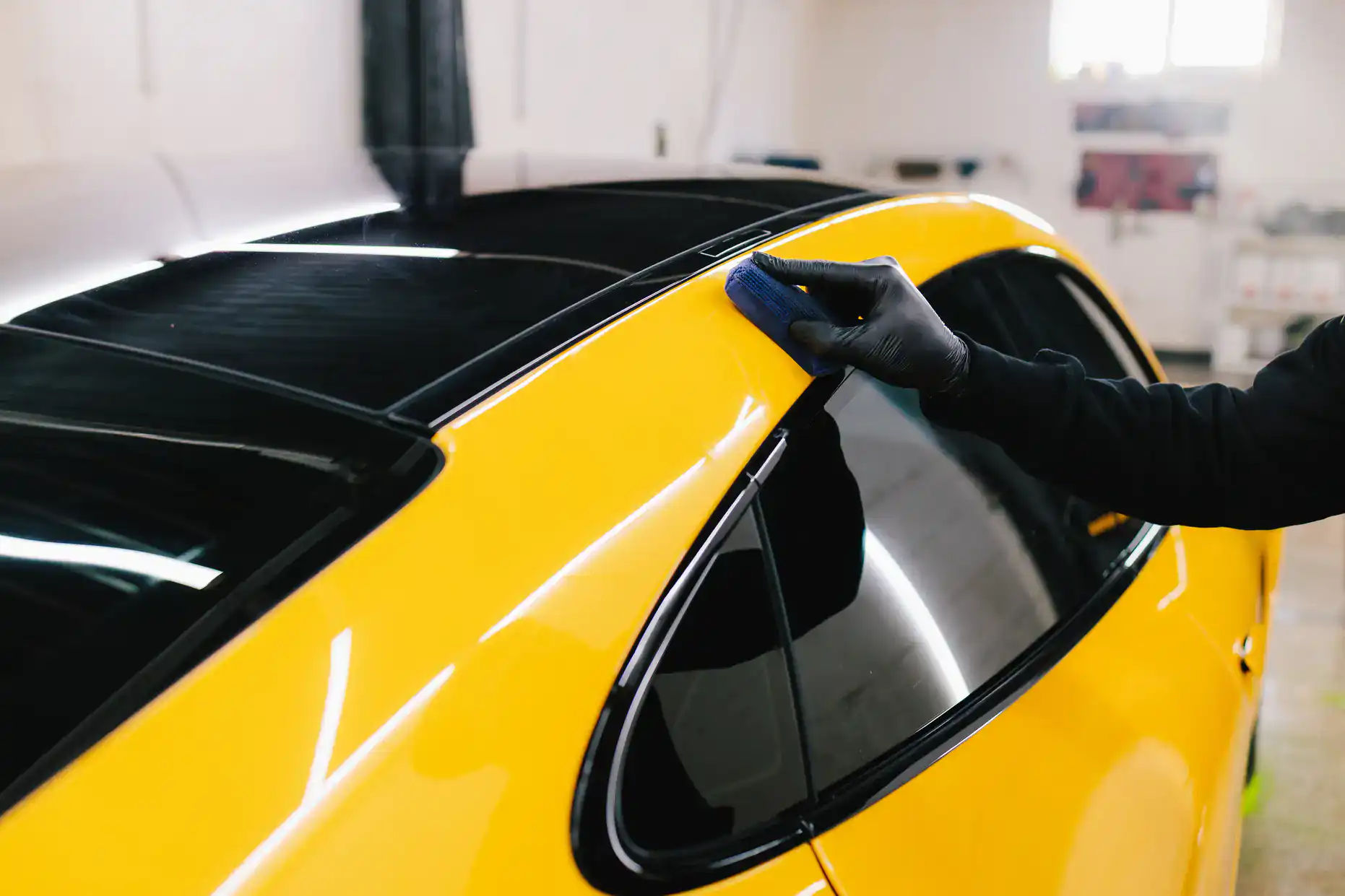
Once the surface is clean and corrected, we apply the ceramic coating panel by panel. This isn’t a spray-and-wipe product. It’s a liquid polymer that chemically bonds to your clear coat and cures into a hard, protective layer. The 9H hardness rating means it’s substantially harder than your factory clear coat.
After application, the coating needs time to cure fully. We’ll tell you exactly how long before you can wash it or expose it to water. Once cured, you’ve got long-term paint protection that doesn’t wash off, doesn’t fade in a month, and doesn’t require reapplication every season. You maintain it by washing your car like normal. That’s it.
What You're Actually Paying For With Ceramic Coating
You’re getting a coating that lasts years, not months. Most quality ceramic coatings hold up for 2-5 years depending on how you maintain the vehicle and how much abuse it takes. That’s years of hydrophobic protection, UV resistance, and chemical resistance that traditional wax and sealants can’t match.
The coating repels water so effectively that rain sheets off your paint instead of sitting in beads that leave water spots. It resists bug splatter, bird droppings, and tree sap, which means those contaminants don’t bond to your clear coat and etch in before you notice them. In Beach Park, where your car bakes in the sun daily, that UV protection prevents the oxidation and fading that turns your paint dull and chalky.
You also get easier maintenance. Washing takes less effort because dirt doesn’t stick like it used to. You’re not scrubbing to remove bonded contaminants, which means less chance of adding swirl marks every time you wash. The gloss stays deep because the coating is smooth at a level your clear coat can’t achieve on its own.
We also offer discounts for military members, first responders, and seniors. If you fall into one of those categories, mention it when you reach out.
How long does ceramic coating actually last on a car in Florida?
A quality ceramic coating lasts between 2 and 5 years in Florida if you maintain it correctly. That range exists because durability depends on a few factors: how often you wash the car, whether it’s garaged or parked outside, and how much direct sun exposure it gets daily.
Florida’s UV intensity is brutal on anything that sits outside, but that’s exactly why ceramic coating matters here. The coating itself resists UV degradation far better than your factory clear coat. It’s designed to take the beating so your paint doesn’t.
You’ll need to wash your car regularly to keep contaminants from sitting on the coating, but you don’t need special products or treatments. Normal pH-neutral car soap works fine. Avoid automatic car washes with harsh brushes that can wear down the coating faster. If you want the coating to last toward the 5-year mark, keeping it clean and parking in shade when possible makes a difference. But even with full sun exposure and regular use, you’re looking at multiple years of protection before you’d need to reapply.
Is ceramic coating worth the cost compared to regular waxing?
If you’re waxing your car every 2-3 months to maintain protection, you’re spending more time and money over two years than a ceramic coating costs upfront. Wax lasts a few weeks to maybe two months if you’re lucky. Then it’s gone, and your paint is exposed again until you reapply.
Ceramic coating costs more initially because it’s a permanent bond that doesn’t wash away. You pay once and you’re covered for years. The protection level isn’t even comparable. Wax sits on top of your paint and offers minimal defense against UV rays, chemical etching, or hard water spots. Ceramic coating bonds to the clear coat and creates a harder, more chemical-resistant barrier.
The real cost comparison is this: ceramic coating now, or paint correction later. If you skip protection and let Florida sun, bird droppings, and contaminants damage your clear coat, you’ll pay for wet sanding and polishing to fix it. That costs as much or more than a coating, and you’re fixing damage instead of preventing it. Ceramic coating is worth it if you plan to keep your vehicle for more than a year and you’d rather not deal with fading, oxidation, or constant waxing.
What's the difference between 9H ceramic coating and paint sealant?
Paint sealant is a synthetic polymer that sits on top of your clear coat and lasts longer than wax, usually 4-6 months. It provides a decent shine and some protection from contaminants, but it doesn’t bond to your paint. It wears off from washing, weather, and friction.
9H ceramic coating is a liquid polymer that chemically bonds to your clear coat at a molecular level. Once it cures, it becomes a semi-permanent layer that doesn’t wash away. The “9H” refers to hardness on the pencil hardness scale, meaning the cured coating is significantly harder than your factory clear coat. That hardness helps resist light scratches, swirl marks, and etching from acidic contaminants.
Sealant is a temporary layer you reapply a few times a year. Ceramic coating is a one-time application that lasts years. Sealant offers basic protection and shine. Ceramic coating offers hydrophobic properties, UV resistance, chemical resistance, and a level of gloss that sealant can’t match. If you want something you apply yourself and don’t mind reapplying regularly, sealant works. If you want real protection that lasts, ceramic coating is the answer.
Can ceramic coating be applied to any vehicle or paint color?
Ceramic coating works on any vehicle and any paint color, as long as the paint is in good condition. The coating bonds to clear coat, and every modern car has clear coat over the base color. Whether you’re driving a black sedan, white truck, or red sports car, the process is the same.
The condition of your paint matters more than the color. If your clear coat is heavily oxidized, scratched, or failing, the coating will seal in those imperfections. That’s why paint correction happens before application. We remove swirl marks, light scratches, and oxidation so the coating goes onto a clean, smooth surface.
Dark colors like black and navy show imperfections more easily, so paint correction is especially important on those vehicles. Light colors hide minor flaws better, but they still benefit from correction before coating. Once the coating is applied, it enhances the gloss and depth of whatever color you have. Black looks deeper. White looks cleaner. Metallic colors pop more. The coating doesn’t change your paint color, it just makes it look the way it’s supposed to when it’s actually protected and properly maintained.
How soon after ceramic coating can I wash my car?
You need to wait at least 7 days before washing your car after ceramic coating application. Some coatings require up to 2 weeks depending on the product and curing conditions. We’ll give you the exact timeframe based on what we apply to your vehicle.
The coating needs time to cure fully and harden into that protective layer. If you wash it too early or expose it to heavy water before it’s cured, you can disrupt the bonding process and weaken the coating. That means you might not get the full durability or hydrophobic performance you paid for.
During the curing period, avoid rain if possible. If you get caught in unexpected weather, it’s not the end of the world, but parking under cover is better. Don’t touch the paint, don’t wipe it down, and definitely don’t run it through a car wash. Once the curing period is over, you can wash it normally. Use a pH-neutral soap and avoid abrasive brushes or automatic washes that beat up the coating. After that, maintenance is simple: wash it when it’s dirty, and the coating does the rest of the work.
Does ceramic coating prevent rock chips and scratches completely?
No. Ceramic coating is not a force field. It won’t stop rock chips from highway driving, and it won’t prevent deep scratches from someone keying your car or scraping a shopping cart against your door. If you want protection against rock chips, you need paint protection film, which is a thick, clear urethane layer designed to absorb impacts.
What ceramic coating does is resist light scratches and swirl marks that come from washing, drying, and daily contact. The 9H hardness makes the surface harder than your factory clear coat, so it’s more resistant to marring from things like dust, dirt, and improper wash techniques. It won’t eliminate all swirls, but it reduces them significantly compared to unprotected paint.
Ceramic coating also protects against chemical etching. Bird droppings, bug guts, and tree sap are acidic and will eat into your clear coat if they sit long enough. The coating resists that etching and gives you more time to wash off contaminants before they cause permanent damage. It’s a protective layer that makes your paint more durable against daily wear, environmental exposure, and minor contact. It’s not armor, but it’s a lot tougher than bare clear coat.