"I had my car treated with the ceramic coating and paint protection film from TIMO Detailing Services, and I couldn't be happier. The team was professional, efficient, and took the time to explain the process. My car looks amazing, and I no longer worry about minor scratches or bird droppings damaging my paint. Highly recommend!"
John D.
"I’m beyond impressed with the mobile detailing service I received from TIMO Detailing. They came to my home and worked on my SUV while I was at work. When I came back, it looked brand new inside and out. They really pay attention to the details and it’s clear they use high-quality products."
Sarah M.
"I’ve had my car detailed multiple times, but nothing compares to the quality of service provided by TIMO Detailing Services. Their paint protection film is top-notch and really helps protect my vehicle from the harsh elements. The team was courteous and thorough, and my car has never looked better."
Michael P.
"TIMO Detailing Services did a phenomenal job on my boat! The team applied a protective coating that made a huge difference, keeping the surfaces clean and easy to maintain. Plus, the shine is incredible. They’re definitely the go-to for all your detailing needs!"
Rachel F.
"I just had my RV detailed by TIMO Detailing Services, and the results exceeded my expectations. They treated both the interior and exterior, and everything looks fantastic. It’s like having a brand new RV again. I appreciate the attention to detail, especially when it comes to hard-to-reach areas."
James L.
"TIMO Detailing Services is the best in the business! I had their mobile detailing team come to my workplace and clean my car while I was in meetings. The entire experience was so easy and the results were amazing. My car hasn’t looked this good in years. I’ll definitely be a repeat customer."
Sophia G.
"I’ve tried a lot of different detailing services over the years, but TIMO Detailing Services stands out. Their customer service was top-notch, and the team went above and beyond to ensure my car was spotless. I opted for their ceramic coating service, and it made the paint on my car look like glass!"
David H.
"I cannot say enough good things about TIMO Detailing Services. They applied paint protection film to my luxury car, and the results are amazing. The film is invisible, and it has kept my vehicle’s paint free from chips and scratches. It’s a game-changer for maintaining my car’s value."
Olivia W.
"What an incredible experience! I had TIMO Detailing Services apply ceramic coating to my truck, and I’m so impressed. The process was quick, the team was professional, and the finish is just stunning. The hydrophobic properties make washing so much easier, and the car stays clean much longer."
Lucas B.
"TIMO Detailing Services did a fantastic job detailing the interior of my car. The team was thorough, cleaning every corner, vacuuming every surface, and conditioning the leather seats. I can’t believe how refreshed my car looks and smells! I will definitely be using them for regular maintenance."
Ella S.
"I had my motorcycle detailed by the team at TIMO Detailing Services, and I’m so happy with the results. They applied paint protection film and gave the bike a full exterior clean. The shine is amazing, and I don’t have to worry about scratches or chips anymore. Highly recommend them for any vehicle!"
George T.
"TIMO Detailing Services exceeded all my expectations. The mobile detailing team arrived on time, was incredibly professional, and did an amazing job. My car looks brand new again, both inside and out. They really take pride in their work, and it shows. I will be recommending them to all my friends and family."
Charlotte R.
Mobile Ceramic Coating Bloomingdale Residents Trust
Less Washing, Fewer Swirls, Zero Oxidation Worries
Florida sun destroys unprotected paint. You’ve seen it—faded hoods, dull clear coat, oxidation creeping in after a year or two. Traditional wax breaks down in weeks here, especially with our heat and afternoon storms.
Nano ceramic coating creates a hydrophobic barrier that actually bonds to your paint at the molecular level. Water beads up and rolls off, taking dirt and contaminants with it. You’re not scrubbing as hard or washing as often, which means fewer swirl marks over time.
The 9H hardness layer resists light scratches from brushes, road debris, and daily wear. It won’t stop a key or a rock chip, but it handles what normal driving throws at it. More importantly, it blocks UV rays that cause fading and oxidation, so your paint keeps its depth and gloss for years instead of months.
You’re looking at two to five years of protection depending on the product and how you maintain it. That’s real value when you consider what paint correction or a respray costs down the road.
Professional Detailing Services in Bloomingdale, FL
We Come to You, Not the Other Way Around
We’ve been serving Bloomingdale since 2020. We’re a mobile operation, which means you don’t lose half your Saturday driving to a shop and waiting around. We show up where you need us—your driveway, your office, wherever works.
Ceramic coating is one of our specialty services, and we don’t rush it. The prep work matters just as much as the coating itself. If your paint isn’t properly decontaminated and corrected first, the coating won’t bond right and you won’t get the results you paid for.
We focus on doing it right the first time. That means taking the extra hour if needed, not cutting corners to squeeze in another job. Our Bloomingdale clients appreciate that approach, especially when they’re investing over a thousand dollars in long-term paint protection.
Our Ceramic Coating Process in Bloomingdale
Here's What Happens When We Coat Your Vehicle
First, we do a full wash and decontamination. That means removing embedded brake dust, tar, tree sap, and anything else stuck in your paint. A clay bar treatment pulls out contaminants you can’t see but can feel if you run your hand over the surface.
Next comes paint correction if needed. Most vehicles have swirls, light scratches, or water spots that need to be polished out before coating. The ceramic coating is transparent—it won’t hide imperfections, it’ll lock them in. So we fix them first.
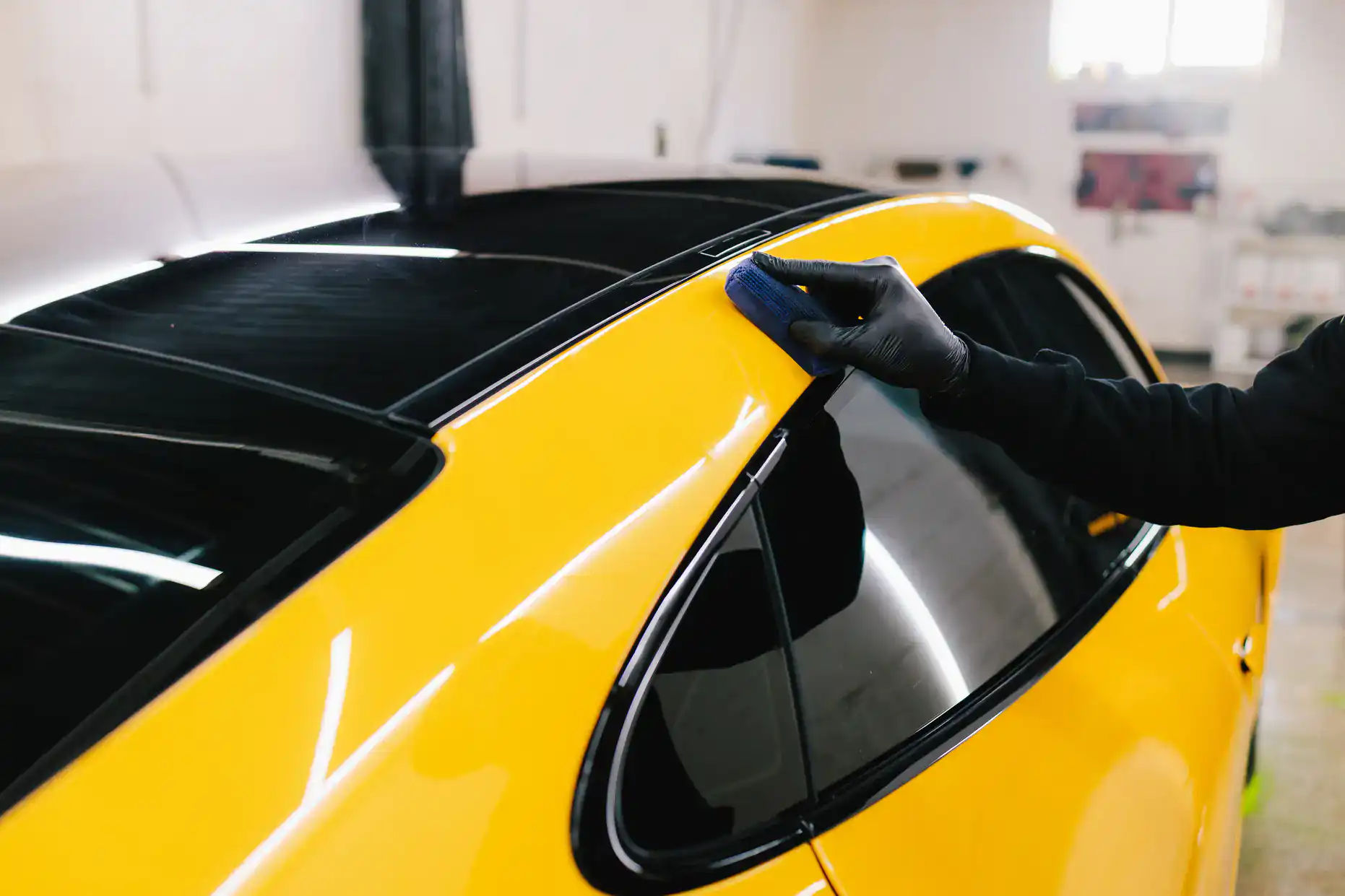
Once the paint is clean and corrected, we apply the ceramic coating panel by panel. It goes on as a liquid and needs to cure properly, which is why application technique matters. We’re working with a product that’s essentially liquid quartz, and it bonds permanently to your clear coat.
After application, there’s a curing period. You’ll need to keep the vehicle dry for 24 to 48 hours depending on the product. After that, the coating is fully hardened and you’ve got a protective layer that’ll outlast any wax or sealant by years.
This isn’t a spray-on product you can buy at an auto parts store. Professional-grade nano ceramic coatings require proper surface prep, controlled application, and curing time. That’s why the process takes several hours and why it costs what it does.
You’re getting full paint decontamination, clay bar treatment, and a multi-stage wash before we even open the coating bottle. If your paint needs correction—and most vehicles in Bloomingdale do after dealing with our sun and pollen—that’s included in the prep work.
The coating itself provides 9H hardness protection, which is about as hard as quartz. It creates a hydrophobic surface where water contact angle exceeds 110 degrees, meaning water just slides off. You’ll notice it immediately the first time it rains.
We also offer discounts for military members, first responders, and seniors. If you’re in one of those groups, mention it when you book. Bloomingdale has a strong community of service members and retirees, and we make sure to recognize that.
The real value shows up over time. You’re avoiding the cost of paint correction services every year, reducing how often you need to wash, and protecting your resale value. Buyers notice well-maintained paint, and a ceramic-coated vehicle shows you took care of it.
How long does ceramic coating actually last in Florida's climate?
Professional ceramic coatings last between two and five years in Florida, depending on which product you choose and how you maintain the vehicle. The cheaper consumer-grade products you see online might claim similar durability, but they don’t hold up the same way.
Florida’s climate is particularly hard on paint protection. Our UV index ranks among the highest in the country, we get intense afternoon heat, and then sudden storms that dump acidic rain. Traditional waxes break down in weeks here, sometimes faster. Sealants might give you a few months.
Ceramic coating bonds at a molecular level to your clear coat, which is why it lasts years instead of weeks. That said, you still need to wash the vehicle regularly and avoid automatic car washes with harsh brushes. The coating protects your paint, but it’s not indestructible. Treat it right and you’ll get the full lifespan out of it.
Is ceramic coating worth the cost compared to regular waxing?
If you’re planning to keep your vehicle for more than a couple years, yes. Here’s the math: quality wax costs around $20-30 and lasts maybe six weeks in Florida. You’d need to wax your car 8-10 times a year to maintain protection, and that’s assuming you’re doing it yourself and your time is free.
Over three years, that’s 24-30 wax applications. Even if you enjoy spending your Saturdays waxing your car, you’re still dealing with inconsistent protection and diminishing returns as your paint oxidizes and degrades between applications.
Ceramic coating costs more upfront—usually over a thousand dollars for professional application—but it works 24/7 for years. You’re not reapplying every month. You’re not worrying about whether your paint is protected. And you’re avoiding the bigger cost of paint correction or repainting down the road when UV damage and oxidation set in. The coating pays for itself in prevented damage and saved time.
Can ceramic coating be applied to any vehicle or paint color?
Yes, ceramic coating works on any factory paint color and most vehicle types. We’ve coated everything from daily drivers to luxury vehicles to trucks that see regular outdoor use. The coating bonds to your clear coat, not the color underneath, so black, white, red, or any other color responds the same way.
That said, darker colors show the benefits more dramatically. If you have a black or dark blue vehicle, you know how quickly swirl marks and water spots become visible. The hydrophobic properties of ceramic coating help prevent those issues, and the gloss enhancement is more noticeable on dark paint.
The condition of your paint matters more than the color. If your clear coat is severely damaged, peeling, or heavily oxidized, we need to address that first. Sometimes that means paint correction is enough. Other times, the paint is too far gone and coating won’t help. We’ll be straight with you about what’s realistic before you spend the money.
What's the difference between 9H ceramic coating and other options?
The “9H” refers to the pencil hardness scale, which measures scratch resistance. A 9H coating is about as hard as quartz, which is where the “quartz coating” term comes from. It’s the highest rating on that scale and indicates serious scratch resistance against light abrasions.
Other options include spray sealants, which might last a few months, and consumer-grade ceramic products that don’t require the same prep work or curing time. Those are easier to apply, but they don’t bond as permanently or provide the same level of protection. You’re getting maybe 6-12 months instead of multiple years.
Professional 9H nano ceramic coating uses silicon dioxide (SiO2) technology that chemically bonds to your paint. It’s not sitting on top like wax—it’s actually integrated with your clear coat. That’s why it withstands hundreds of washes, constant sun exposure, and daily driving without breaking down. The application process is more involved and the product costs more, but the durability gap is significant.
Do I still need to wash my car after ceramic coating?
Yes, but it’s easier and you won’t need to do it as often. The hydrophobic properties mean dirt and grime don’t stick as aggressively. When you do wash, contaminants come off with less scrubbing, which reduces the risk of adding swirl marks.
You’ll want to avoid automatic car washes with spinning brushes—those can still mar the coating over time. Touchless washes are fine, or hand washing with proper technique. Use a pH-neutral soap, a microfiber wash mitt, and the two-bucket method to minimize any chance of scratching.
Most of our Bloomingdale clients tell us they’re washing half as often after coating and spending less time on each wash. The coating does a lot of the work for you. Bird droppings, tree sap, and bug splatter wipe off easier too, which matters here since we’re surrounded by oak trees and love bugs show up twice a year like clockwork.
Can ceramic coating be applied over existing scratches or swirls?
It can be applied, but it shouldn’t be. Ceramic coating is transparent, which means it won’t hide imperfections—it’ll actually make them more visible by adding gloss and depth to your paint. Any scratches, swirls, or oxidation present before coating will be locked in under that protective layer.
That’s why paint correction is a critical part of the process. We use a multi-stage polishing system to remove or minimize existing damage before applying the coating. Light swirls and scratches can usually be polished out completely. Deeper scratches might still be visible but significantly improved.
If your paint is in rough shape, we’ll walk you through what’s realistic. Sometimes full correction isn’t possible without going through the clear coat, and at that point you’re looking at a respray. But most vehicles just need a solid polish to get the paint ready for coating. Once the coating is on, you’re protecting that corrected finish for years, which is the whole point.