Protection That Actually Survives Florida's Climate
Your paint faces brutal UV, salt air, and lovebug acid every single day. Nano ceramic coating creates a 9H-hardness barrier that stops the damage before it starts.
"I had my car treated with the ceramic coating and paint protection film from TIMO Detailing Services, and I couldn't be happier. The team was professional, efficient, and took the time to explain the process. My car looks amazing, and I no longer worry about minor scratches or bird droppings damaging my paint. Highly recommend!"
John D.
"I’m beyond impressed with the mobile detailing service I received from TIMO Detailing. They came to my home and worked on my SUV while I was at work. When I came back, it looked brand new inside and out. They really pay attention to the details and it’s clear they use high-quality products."
Sarah M.
"I’ve had my car detailed multiple times, but nothing compares to the quality of service provided by TIMO Detailing Services. Their paint protection film is top-notch and really helps protect my vehicle from the harsh elements. The team was courteous and thorough, and my car has never looked better."
Michael P.
"TIMO Detailing Services did a phenomenal job on my boat! The team applied a protective coating that made a huge difference, keeping the surfaces clean and easy to maintain. Plus, the shine is incredible. They’re definitely the go-to for all your detailing needs!"
Rachel F.
"I just had my RV detailed by TIMO Detailing Services, and the results exceeded my expectations. They treated both the interior and exterior, and everything looks fantastic. It’s like having a brand new RV again. I appreciate the attention to detail, especially when it comes to hard-to-reach areas."
James L.
"TIMO Detailing Services is the best in the business! I had their mobile detailing team come to my workplace and clean my car while I was in meetings. The entire experience was so easy and the results were amazing. My car hasn’t looked this good in years. I’ll definitely be a repeat customer."
Sophia G.
"I’ve tried a lot of different detailing services over the years, but TIMO Detailing Services stands out. Their customer service was top-notch, and the team went above and beyond to ensure my car was spotless. I opted for their ceramic coating service, and it made the paint on my car look like glass!"
David H.
"I cannot say enough good things about TIMO Detailing Services. They applied paint protection film to my luxury car, and the results are amazing. The film is invisible, and it has kept my vehicle’s paint free from chips and scratches. It’s a game-changer for maintaining my car’s value."
Olivia W.
"What an incredible experience! I had TIMO Detailing Services apply ceramic coating to my truck, and I’m so impressed. The process was quick, the team was professional, and the finish is just stunning. The hydrophobic properties make washing so much easier, and the car stays clean much longer."
Lucas B.
"TIMO Detailing Services did a fantastic job detailing the interior of my car. The team was thorough, cleaning every corner, vacuuming every surface, and conditioning the leather seats. I can’t believe how refreshed my car looks and smells! I will definitely be using them for regular maintenance."
Ella S.
"I had my motorcycle detailed by the team at TIMO Detailing Services, and I’m so happy with the results. They applied paint protection film and gave the bike a full exterior clean. The shine is amazing, and I don’t have to worry about scratches or chips anymore. Highly recommend them for any vehicle!"
George T.
"TIMO Detailing Services exceeded all my expectations. The mobile detailing team arrived on time, was incredibly professional, and did an amazing job. My car looks brand new again, both inside and out. They really take pride in their work, and it shows. I will be recommending them to all my friends and family."
Charlotte R.
Long-Term Paint Protection Brandon, FL
What Your Vehicle Gets After We're Done
You’ll notice water beading off your hood like it’s coated in glass. That’s the hydrophobic protection working—liquids can’t stick, dirt slides off with a rinse, and your paint stays cleaner between washes.
The real benefit shows up six months later when your neighbor’s car looks sun-faded and yours still has that showroom depth. Florida’s UV rays break down unprotected clear coat at the molecular level. Ceramic coating bonds to your paint and takes the hit instead.
You’re also done with waxing every three months. Most people spend $200-$400 annually on professional wax that lasts maybe 90 days in this climate. A proper ceramic coating gives you years of protection without the maintenance cycle.
Mobile Ceramic Coating Brandon, FL
We Come to You, Not the Other Way
TIMO Detailing Services has been handling mobile detailing in Brandon since 2020. We work on everything from daily drivers to luxury vehicles, RVs, boats, and aircraft—all at your location.
The reason we focus on ceramic coating is simple: it’s the only paint protection that actually holds up in Florida. We’ve seen too many vehicles with oxidized clear coat and permanent water spots because the owner trusted a $30 spray sealant or traditional wax.
We’re fully insured and use professional-grade nano ceramic coatings, not the consumer stuff you’ll find at auto parts stores. The application process takes time because we’re not cutting corners. Your vehicle gets proper paint correction first, then multiple coating layers that cure into a single protective shield.
Ceramic Coating Process Brandon, FL
Here's What Happens When You Book
We start with a full decontamination wash to remove embedded brake dust, tar, tree sap, and iron particles. You can’t coat over contamination—it’ll trap defects under the ceramic layer permanently.
Next comes paint correction. We remove swirl marks, light scratches, and oxidation using a multi-stage polishing process. This step matters because ceramic coating amplifies whatever’s underneath. If your paint has defects now, the coating will lock them in and make them more visible.
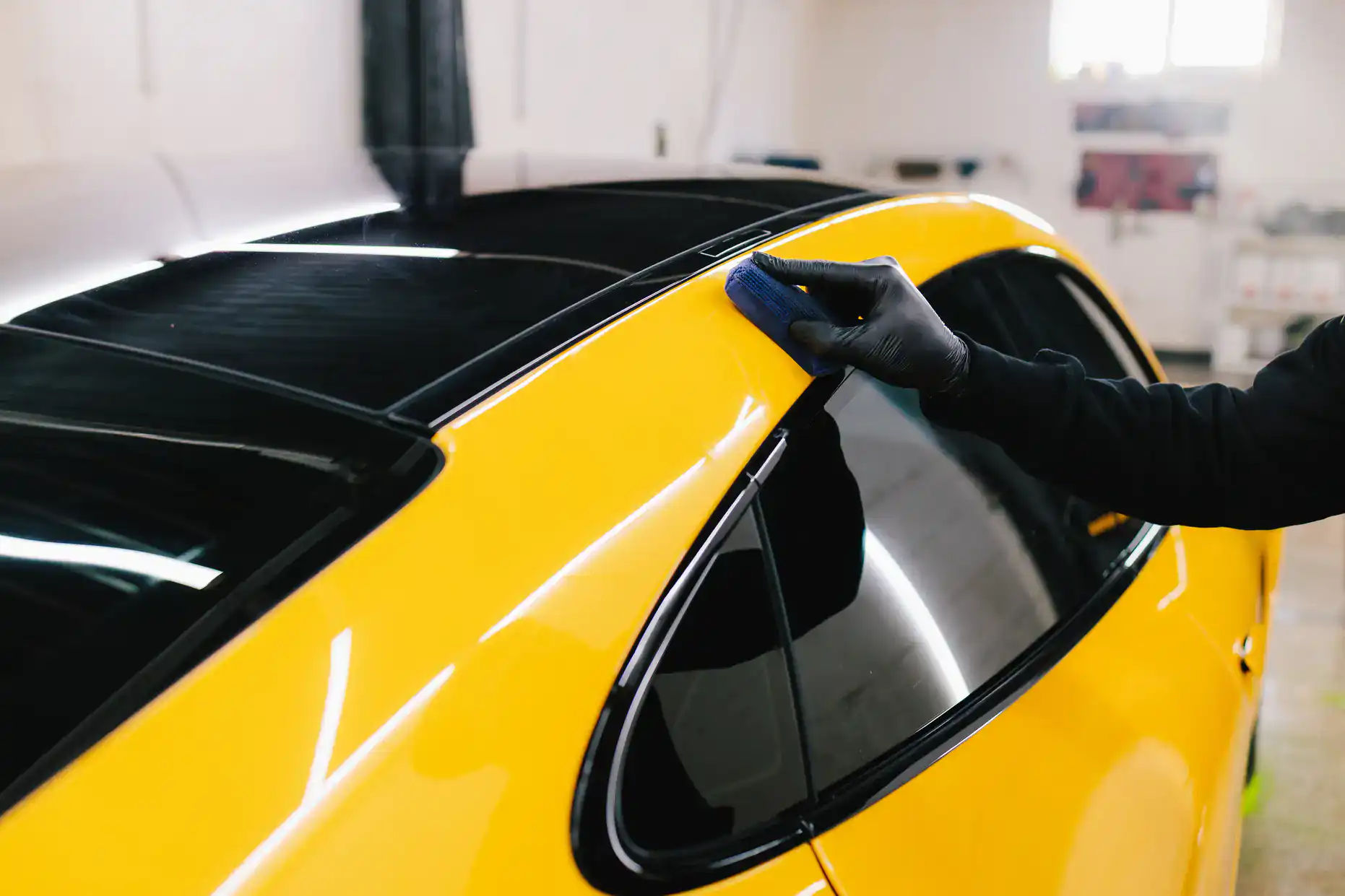
After the paint is corrected and prepped, we apply the nano ceramic coating in controlled layers. Each layer needs to cure properly before the next one goes on. The coating chemically bonds to your clear coat and cross-links into a hard, hydrophobic surface. We typically let it cure for 24 hours before you drive the vehicle. Full hardness takes about a week, and you’ll want to avoid washing it during that time.
Ceramic coating isn’t a paint sealant alternative—it’s a completely different category of protection. Paint sealants are synthetic polymers that sit on top of your clear coat and break down in 3-6 months. Ceramic coatings bond at the molecular level and last years.
The “9H” rating refers to hardness on the pencil scale. Your factory clear coat is around 2H-4H. A 9H ceramic coating adds a sacrificial layer that resists scratches, swirl marks, and chemical etching from bird droppings or bug splatter. It won’t make your paint bulletproof, but it significantly raises the threshold for damage.
In Brandon, the biggest threat to your paint is UV degradation and water spots from our hard water mixed with humidity. Ceramic coating reflects UV rays instead of absorbing them, and the hydrophobic properties mean water doesn’t sit on the surface long enough to etch. You’ll also find that contaminants like pollen, dust, and light dirt rinse off without scrubbing. That means fewer washes and less chance of adding swirl marks over time.
We offer packages ranging from 6-month coatings up to 10+ year professional-grade options. The difference is in the chemical formula and number of layers. Longer-lasting coatings cost more upfront but save you money and time compared to repeat waxing or cheaper coatings that fail early.
How long does ceramic coating actually last in Florida's climate?
Professional-grade ceramic coatings last 2-5 years in Florida if maintained correctly, with premium formulas pushing 7-10 years. The key word is “maintained.” You still need to wash your vehicle regularly—the coating makes it easier, but it doesn’t mean you can ignore it.
Florida’s climate is harder on coatings than most places. Constant UV exposure, high humidity, salt air near the coast, and acidic rain all work against the coating over time. Consumer-grade ceramic sprays you apply yourself might last 3-6 months. Professional coatings use stronger chemical bonds and thicker layers, which is why they hold up longer.
You’ll know the coating is still working when water beads tightly and rolls off the surface. When you start seeing water sheeting instead of beading, the hydrophobic layer is wearing thin. Most people get the coating inspected and topped off every 2-3 years to maintain full protection.
Is ceramic coating worth it compared to regular waxing?
If you plan to keep your vehicle longer than two years, ceramic coating saves you money and time. Waxing costs $100-$150 per application if you pay a detailer, and you need it done every 3-4 months in Florida. That’s $400-$600 annually. A mid-tier ceramic coating costs $800-$1,200 upfront and lasts 3-5 years with no reapplication.
The bigger difference is protection quality. Wax sits on top of your clear coat and melts in the heat. It offers almost zero UV protection and breaks down fast in rain. Ceramic coating bonds to the paint and creates a hard shell that actually blocks UV rays and resists chemical damage from bird droppings, bug guts, and tree sap.
You also spend less time washing. The hydrophobic effect means dirt doesn’t bond to the paint. A quick rinse removes most contamination, and you’re not scrubbing as hard during washes. Less scrubbing means fewer swirl marks and less wear on your clear coat over time.
Can I apply ceramic coating myself or do I need a professional?
You can buy DIY ceramic coating kits, but the results won’t match a professional application. The coatings sold to consumers use weaker formulas because they’re designed to be forgiving during application. Professional-grade coatings are far more durable but also far less forgiving—if you mess up the application, you’re looking at permanent high spots, streaks, or uneven coverage that requires paint correction to fix.
The bigger issue is prep work. Ceramic coating locks in whatever’s on your paint. If you skip proper decontamination and paint correction, you’re sealing in swirl marks, water spots, and embedded contaminants. Most DIYers don’t have a polisher, clay bar, iron remover, or the experience to properly prep the surface.
Professional application also includes paint thickness measurements to avoid burning through the clear coat during correction, controlled environment to prevent dust contamination during curing, and warranty coverage if something goes wrong. If you’re coating a beater car you plan to sell soon, DIY might be fine. If you’re protecting a vehicle you care about, hire someone who does this daily.
Does ceramic coating protect against scratches and rock chips?
Ceramic coating adds scratch resistance, but it won’t stop rock chips or key scratches. The 9H hardness rating helps prevent light scratches from brushes, swirl marks from improper washing, and minor abrasions from things like tree branches or shopping carts. It raises the bar for what can damage your paint, but it’s not a force field.
Rock chips happen because of impact force, not surface hardness. A rock flying at 60 mph will break through ceramic coating and your clear coat. If you want rock chip protection, you need paint protection film (PPF), which is a thick, flexible urethane layer that absorbs impacts. Some people combine both—PPF on high-impact areas like the hood and front bumper, ceramic coating on the rest of the vehicle.
The real value of ceramic coating for scratch protection is in daily wear. You’ll get fewer swirl marks from washing, less damage from bird droppings and bug splatter sitting on the paint, and better resistance to automatic car washes if you’re stuck using one. It’s not scratch-proof, but it’s significantly more scratch-resistant than bare clear coat.
What's the difference between ceramic coating and paint sealant?
Paint sealant is a synthetic polymer that sits on top of your clear coat. It fills in minor imperfections and adds a layer of shine, but it doesn’t bond to the paint. Sealants typically last 4-6 months and offer minimal protection against UV rays or chemical etching. They’re basically a longer-lasting version of wax.
Ceramic coating is a liquid polymer that chemically bonds with your clear coat at the molecular level. Once it cures, it becomes a semi-permanent layer that can’t be washed off or stripped away without polishing. The bond is strong enough that the coating becomes part of your paint’s surface. This is why ceramic coatings last years instead of months.
The protection level is completely different too. Sealants might reduce water spotting and make your car easier to wash, but they don’t stop UV damage or resist acid etching from environmental contaminants. Ceramic coating creates a hard, hydrophobic barrier that actively repels water, blocks UV rays, and resists chemical bonding from things like bird droppings or tree sap. If you want protection that lasts longer than a few months in Florida, sealant won’t cut it.
How do I maintain my vehicle after ceramic coating is applied?
Maintenance is simple but not optional. You still need to wash your vehicle every 2-3 weeks to remove contaminants before they have a chance to bond or etch the coating. The difference is that washing takes less effort—most dirt rinses off with water pressure alone, and you don’t need to scrub as hard.
Use a pH-neutral car soap and avoid automatic car washes with harsh chemicals or stiff brushes. The coating can handle it better than bare paint, but why risk it? Stick to touchless washes or hand washing with a microfiber mitt. Don’t use wax or spray sealants on top of the coating—they can interfere with the hydrophobic properties and leave streaks.
Every 6-12 months, consider a ceramic boost spray or professional coating maintenance. These products refresh the hydrophobic layer and remove any bonded contaminants that regular washing missed. If you notice water isn’t beading as tightly or the paint feels rough to the touch, it’s time for a maintenance detail. Proper care extends the coating’s life and keeps it performing like new.