"I had my car treated with the ceramic coating and paint protection film from TIMO Detailing Services, and I couldn't be happier. The team was professional, efficient, and took the time to explain the process. My car looks amazing, and I no longer worry about minor scratches or bird droppings damaging my paint. Highly recommend!"
John D.
"I’m beyond impressed with the mobile detailing service I received from TIMO Detailing. They came to my home and worked on my SUV while I was at work. When I came back, it looked brand new inside and out. They really pay attention to the details and it’s clear they use high-quality products."
Sarah M.
"I’ve had my car detailed multiple times, but nothing compares to the quality of service provided by TIMO Detailing Services. Their paint protection film is top-notch and really helps protect my vehicle from the harsh elements. The team was courteous and thorough, and my car has never looked better."
Michael P.
"TIMO Detailing Services did a phenomenal job on my boat! The team applied a protective coating that made a huge difference, keeping the surfaces clean and easy to maintain. Plus, the shine is incredible. They’re definitely the go-to for all your detailing needs!"
Rachel F.
"I just had my RV detailed by TIMO Detailing Services, and the results exceeded my expectations. They treated both the interior and exterior, and everything looks fantastic. It’s like having a brand new RV again. I appreciate the attention to detail, especially when it comes to hard-to-reach areas."
James L.
"TIMO Detailing Services is the best in the business! I had their mobile detailing team come to my workplace and clean my car while I was in meetings. The entire experience was so easy and the results were amazing. My car hasn’t looked this good in years. I’ll definitely be a repeat customer."
Sophia G.
"I’ve tried a lot of different detailing services over the years, but TIMO Detailing Services stands out. Their customer service was top-notch, and the team went above and beyond to ensure my car was spotless. I opted for their ceramic coating service, and it made the paint on my car look like glass!"
David H.
"I cannot say enough good things about TIMO Detailing Services. They applied paint protection film to my luxury car, and the results are amazing. The film is invisible, and it has kept my vehicle’s paint free from chips and scratches. It’s a game-changer for maintaining my car’s value."
Olivia W.
"What an incredible experience! I had TIMO Detailing Services apply ceramic coating to my truck, and I’m so impressed. The process was quick, the team was professional, and the finish is just stunning. The hydrophobic properties make washing so much easier, and the car stays clean much longer."
Lucas B.
"TIMO Detailing Services did a fantastic job detailing the interior of my car. The team was thorough, cleaning every corner, vacuuming every surface, and conditioning the leather seats. I can’t believe how refreshed my car looks and smells! I will definitely be using them for regular maintenance."
Ella S.
"I had my motorcycle detailed by the team at TIMO Detailing Services, and I’m so happy with the results. They applied paint protection film and gave the bike a full exterior clean. The shine is amazing, and I don’t have to worry about scratches or chips anymore. Highly recommend them for any vehicle!"
George T.
"TIMO Detailing Services exceeded all my expectations. The mobile detailing team arrived on time, was incredibly professional, and did an amazing job. My car looks brand new again, both inside and out. They really take pride in their work, and it shows. I will be recommending them to all my friends and family."
Charlotte R.
Professional Ceramic Coating in Culbreath Isles
What You Get When the Coating Actually Lasts
Your car stops looking tired after three months. The paint stays glossy through summer storms and doesn’t fade by fall. Water beads off like it’s supposed to, and you’re not scrubbing bird droppings for twenty minutes every weekend.
That’s what happens when ceramic coating is done right. You get years of protection instead of months. The hydrophobic layer keeps contaminants on the surface where a rinse takes care of them, not embedded in your clear coat where they etch and stain.
Living near the water in Culbreath Isles means your vehicle faces salt air every single day. That salt doesn’t just sit there—it bonds to your paint at a molecular level and breaks down the clear coat faster than you’d see anywhere inland. A proper nano ceramic coating creates a barrier that salt can’t penetrate, which means your paint stays intact and your vehicle holds its value.
You’re not dealing with water spots from sprinklers anymore. You’re not watching your black paint turn chalky. You’re driving something that still looks new because it’s actually protected.
Mobile Detailing Services in Culbreath Isles
We've Been Doing This Since 2020
We started during the pandemic when mobile services became essential, and we’ve spent the last several years perfecting ceramic coating application for Florida’s brutal climate. We’re not a franchise following a script—we’re a local operation that understands what salt air and UV exposure do to your vehicle because we see it every day.
We work in Culbreath Isles and the surrounding Tampa Bay area, which means we’re not driving an hour to get to you and rushing the job to make it worth the trip. You’re in our service radius. We can take the time to prep your paint correctly, apply the coating in proper conditions, and make sure it cures the way it should.
You’ll work with someone who shows up on time, explains what’s happening, and doesn’t leave until the work is done right. That’s why clients refer us and why we’re scaling from 30 jobs a month to 300—because the results speak for themselves.
Ceramic Coating Process in Culbreath Isles
Here's Exactly What Happens When We Coat Your Vehicle
First, we come to your location in Culbreath Isles. No drop-offs, no waiting rooms, no coordinating rides. We bring everything needed to do the job right where your vehicle sits.
We start with a full decontamination wash to remove embedded contaminants that regular washing misses—brake dust, tar, tree sap, and the salt residue that’s invisible but doing damage. Then we clay bar the paint to get the surface completely smooth. If your paint has swirls, scratches, or oxidation, we correct that with a multi-stage polish before any coating goes on.
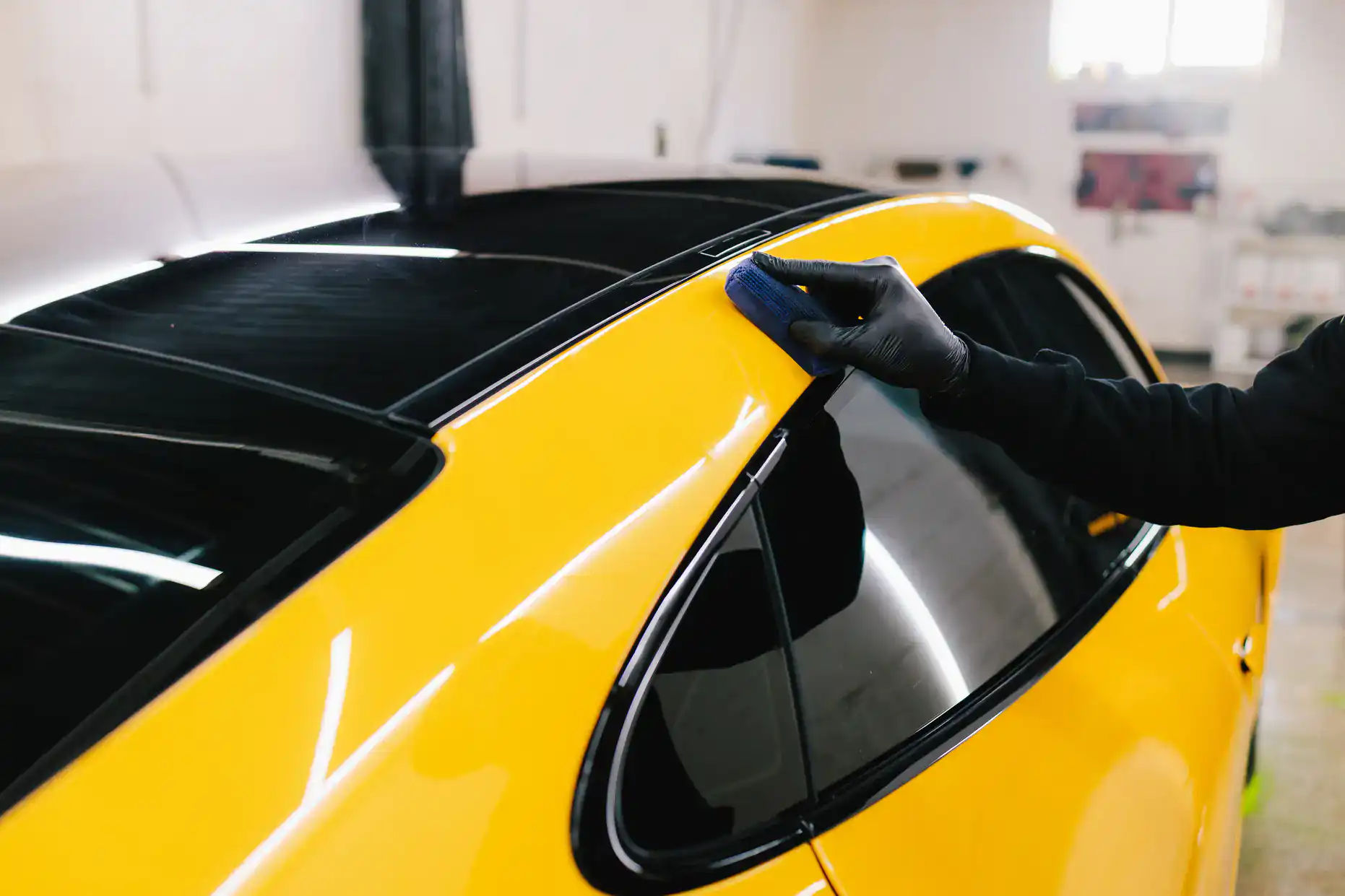
The actual ceramic coating application happens in controlled conditions. We apply the 9H-rated nano ceramic coating panel by panel, making sure it bonds to the clear coat properly. This isn’t a spray-on wax—this is a chemical bond that becomes part of your paint’s protective layer.
After application, the coating needs time to cure. Depending on the product tier you choose, that’s anywhere from 24 hours to a few days where the vehicle shouldn’t get wet. Once cured, you’ve got a hydrophobic, UV-resistant, chemically-resistant layer that lasts years, not months.
We’ll walk you through maintenance—which is simple—and you’re done. Your vehicle is protected, and you didn’t have to leave your driveway.
You’re getting a full paint correction and decontamination before any coating touches your vehicle. That’s not optional—it’s the only way ceramic coating works the way it should. If contaminants or imperfections are sealed under the coating, you’re stuck with them for years.
The coating itself is a professional-grade product, not the consumer stuff you buy online. We’re talking about true 9H hardness ratings and hydrophobic properties that last. Depending on what you choose, that’s anywhere from two years of protection up to ten-plus with premium options.
For Culbreath Isles specifically, this matters more than it would inland. You’re dealing with salt air corrosion year-round, not just in winter. You’ve got intense UV exposure that degrades clear coat faster than most of the country experiences. And you’ve got sprinkler water with mineral content that etches paint when it dries in the sun.
Ceramic coating stops all of that. The UV inhibitors in the coating block the rays before they break down your clear coat. The hydrophobic layer makes water—and everything in it—roll off instead of sitting on the paint. And the chemical resistance means salt and minerals can’t bond to the surface.
You also get easier maintenance going forward. Contaminants sit on top of the coating instead of embedding in your paint, so most of the time a simple rinse is all you need. When you do wash, you’re not scrubbing—you’re just removing surface dirt that didn’t stick in the first place.
How long does ceramic coating actually last in Florida's climate?
It depends on the product tier, but you’re looking at two to ten years of real protection if it’s applied correctly. Entry-level coatings give you around two years. Mid-tier options last five to seven. Premium and graphene-based coatings can exceed ten years with proper maintenance.
Florida’s climate is harder on coatings than most places, so those timeframes assume you’re in the worst-case scenario—salt air, high UV, humidity, and frequent rain. The coating doesn’t just disappear after two years. It gradually loses hydrophobic properties and chemical resistance, which is when you’d want to reapply.
The key is proper prep and application. If the paint isn’t fully decontaminated and corrected before coating, or if the coating doesn’t cure in the right conditions, you won’t get the full lifespan. That’s why mobile application matters—we control the environment and don’t rush the process to move on to the next car in a shop queue.
Is ceramic coating worth the cost compared to regular waxing?
If you’re waxing every month or two—which is what Florida’s climate demands—you’re spending more over two years than a ceramic coating costs, and you’re getting worse protection. Wax sits on top of paint and breaks down in weeks under UV exposure and heat. Ceramic coating bonds to the clear coat and lasts years.
The real cost comparison isn’t just money. It’s time. Waxing takes hours every month if you’re doing it yourself, or you’re paying someone else to do it repeatedly. Ceramic coating is one application that protects your vehicle for years with minimal maintenance.
And wax doesn’t stop water spots, won’t prevent salt corrosion, and offers almost no UV protection compared to a coating with built-in inhibitors. You’re not just paying for longevity—you’re paying for actual protection that keeps your paint from degrading. When it’s time to sell or trade in, that difference shows up in resale value.
Can ceramic coating be applied to any vehicle, including boats and RVs?
Yes. Ceramic coating works on any painted surface—cars, trucks, motorcycles, boats, RVs, and even aircraft. The process is the same: decontaminate, correct, apply, cure. The size of the vehicle changes how long it takes and what it costs, but the protection is identical.
For boats especially, ceramic coating makes a huge difference in Culbreath Isles. You’re dealing with constant water exposure, salt, and UV that’s even more intense on the water than on land. Gelcoat oxidizes fast without protection, and ceramic coating prevents that while making cleanup dramatically easier after every trip.
RVs benefit the same way. You’ve got a large surface area that’s expensive to repaint, and it’s exposed to the elements whether you’re using it or storing it. Ceramic coating keeps the exterior from fading and makes washing simple—which matters when you’re cleaning something that size. We handle all of it, and the mobile service means we come to wherever the vehicle is stored.
What's the maintenance like after ceramic coating is applied?
Maintenance is easier than what you’re doing now. Most of the time, a rinse with a hose or pressure washer is enough because contaminants don’t bond to the coating—they sit on top. When you do need to wash, you’re using a pH-neutral soap and a microfiber mitt, no scrubbing required.
You’ll want to avoid automatic car washes with harsh brushes or chemicals, since those can degrade the coating over time. Touchless washes are fine. Hand washing is better. The hydrophobic properties mean water sheets off during the rinse, so drying is faster and you’re not chasing water spots.
Every six to twelve months, you might apply a ceramic boost spray to refresh the hydrophobic layer. That takes ten minutes. Some people skip it entirely and the coating still performs. There’s no waxing, no polishing, no clay bar treatments unless you’ve let something sit on the paint for weeks. It’s the lowest-maintenance option for long-term paint protection, which is the whole point.
Does ceramic coating protect against scratches and rock chips?
It helps, but it’s not armor. Ceramic coating adds a hard layer—9H hardness rating—that resists light scratches from washing, tree branches, and minor abrasions. It won’t stop a key, a shopping cart, or a rock chip from highway driving. Those require physical impact protection like paint protection film.
What ceramic coating does is prevent the kind of damage that happens slowly over time—swirl marks from improper washing, fine scratches from contaminants rubbing against paint, and clear coat degradation from UV and chemicals. That’s the damage most people don’t notice until it’s everywhere, and that’s what ruins resale value.
If you want scratch protection and ceramic coating, the best approach is paint protection film on high-impact areas like the hood, bumper, and mirrors, with ceramic coating over the rest of the vehicle. Some people apply ceramic coating on top of PPF for added gloss and easier cleaning. We can do both, and we’ll recommend what makes sense based on how you use the vehicle and what you’re trying to protect against.
How soon can I wash my car after ceramic coating?
Wait at least seven days. Some coatings need up to two weeks depending on the product and humidity levels. The coating is curing during that time—forming a chemical bond with your clear coat—and exposing it to water or soap interrupts that process.
You can drive the car. Light rain won’t hurt it. But don’t wash it, don’t park under sprinklers, and don’t let it sit in heavy rain for extended periods during the first week. If something gets on the paint—bird droppings, bugs, tree sap—you can gently wipe it off with a damp microfiber towel, but don’t scrub and don’t use soap.
After the curing period, the coating is fully bonded and you can wash normally. That’s when the hydrophobic properties are at full strength and water starts beading off the way you expect. We’ll give you specific instructions based on the product we use, and we’ll tell you exactly when it’s safe to wash. Following that timeline is the difference between a coating that lasts years and one that fails in months.