Mobile ceramic coating services that come to you in Lake Magdalene—no shop visits, no wasted time, just professional 9H protection applied at your home or office.
"I had my car treated with the ceramic coating and paint protection film from TIMO Detailing Services, and I couldn't be happier. The team was professional, efficient, and took the time to explain the process. My car looks amazing, and I no longer worry about minor scratches or bird droppings damaging my paint. Highly recommend!"
John D.
"I’m beyond impressed with the mobile detailing service I received from TIMO Detailing. They came to my home and worked on my SUV while I was at work. When I came back, it looked brand new inside and out. They really pay attention to the details and it’s clear they use high-quality products."
Sarah M.
"I’ve had my car detailed multiple times, but nothing compares to the quality of service provided by TIMO Detailing Services. Their paint protection film is top-notch and really helps protect my vehicle from the harsh elements. The team was courteous and thorough, and my car has never looked better."
Michael P.
"TIMO Detailing Services did a phenomenal job on my boat! The team applied a protective coating that made a huge difference, keeping the surfaces clean and easy to maintain. Plus, the shine is incredible. They’re definitely the go-to for all your detailing needs!"
Rachel F.
"I just had my RV detailed by TIMO Detailing Services, and the results exceeded my expectations. They treated both the interior and exterior, and everything looks fantastic. It’s like having a brand new RV again. I appreciate the attention to detail, especially when it comes to hard-to-reach areas."
James L.
"TIMO Detailing Services is the best in the business! I had their mobile detailing team come to my workplace and clean my car while I was in meetings. The entire experience was so easy and the results were amazing. My car hasn’t looked this good in years. I’ll definitely be a repeat customer."
Sophia G.
"I’ve tried a lot of different detailing services over the years, but TIMO Detailing Services stands out. Their customer service was top-notch, and the team went above and beyond to ensure my car was spotless. I opted for their ceramic coating service, and it made the paint on my car look like glass!"
David H.
"I cannot say enough good things about TIMO Detailing Services. They applied paint protection film to my luxury car, and the results are amazing. The film is invisible, and it has kept my vehicle’s paint free from chips and scratches. It’s a game-changer for maintaining my car’s value."
Olivia W.
"What an incredible experience! I had TIMO Detailing Services apply ceramic coating to my truck, and I’m so impressed. The process was quick, the team was professional, and the finish is just stunning. The hydrophobic properties make washing so much easier, and the car stays clean much longer."
Lucas B.
"TIMO Detailing Services did a fantastic job detailing the interior of my car. The team was thorough, cleaning every corner, vacuuming every surface, and conditioning the leather seats. I can’t believe how refreshed my car looks and smells! I will definitely be using them for regular maintenance."
Ella S.
"I had my motorcycle detailed by the team at TIMO Detailing Services, and I’m so happy with the results. They applied paint protection film and gave the bike a full exterior clean. The shine is amazing, and I don’t have to worry about scratches or chips anymore. Highly recommend them for any vehicle!"
George T.
"TIMO Detailing Services exceeded all my expectations. The mobile detailing team arrived on time, was incredibly professional, and did an amazing job. My car looks brand new again, both inside and out. They really take pride in their work, and it shows. I will be recommending them to all my friends and family."
Charlotte R.
Long-Term Paint Protection Lake Magdalene
What Happens After We Apply Ceramic Coating
You stop worrying about Florida weather destroying your paint. The nano ceramic coating creates a hydrophobic barrier that repels water, contaminants, and UV rays—the three things that fade and damage your vehicle fastest in Lake Magdalene’s climate.
Washing your car takes half the time because dirt doesn’t stick. Water beads off in sheets. Bird droppings, tree sap, and brake dust wipe away without scrubbing or damaging the clear coat underneath.
Your vehicle holds its value better. When you’re ready to sell or trade in, the paint looks newer than comparable vehicles because it’s been shielded from oxidation and environmental wear. That’s the difference between a paint sealant alternative that lasts weeks and a 9H ceramic coating that protects for years.
Mobile Ceramic Coating Lake Magdalene FL
We've Been Protecting Lake Magdalene Vehicles Since 2020
Timo Detailing Services started during the pandemic when vehicle owners needed reliable mobile service without the hassle of drop-offs and pickups. We’re fully insured and certified, and we’ve spent over six years perfecting ceramic coating application on everything from daily drivers to luxury vehicles.
Lake Magdalene drivers deal with intense sun exposure, afternoon storms, and humidity that accelerates paint deterioration. We understand what your vehicle faces here because we work in these conditions daily. Our service area stays tight—Temple Terrace, Citrus Park, Lutz—so we’re never rushing between jobs or cutting corners to make up time.
You get a technician who shows up on time, takes the extra minutes to prep your paint correctly, and doesn’t leave until the coating is flawless. That’s why customers refer us and why we’re scaling from 30 to 300 clients monthly.
Professional Ceramic Coating Process Florida
Here's What Happens When You Book
We start with a full decontamination wash to remove embedded dirt, tar, and iron particles that regular washing misses. Your paint needs to be completely clean before any coating touches it—otherwise you’re sealing in contaminants.
Next comes paint correction if needed. Minor scratches, swirl marks, and oxidation get polished out so the ceramic coating bonds to smooth, healthy paint. This step makes the biggest visual difference because the coating amplifies whatever surface is underneath.
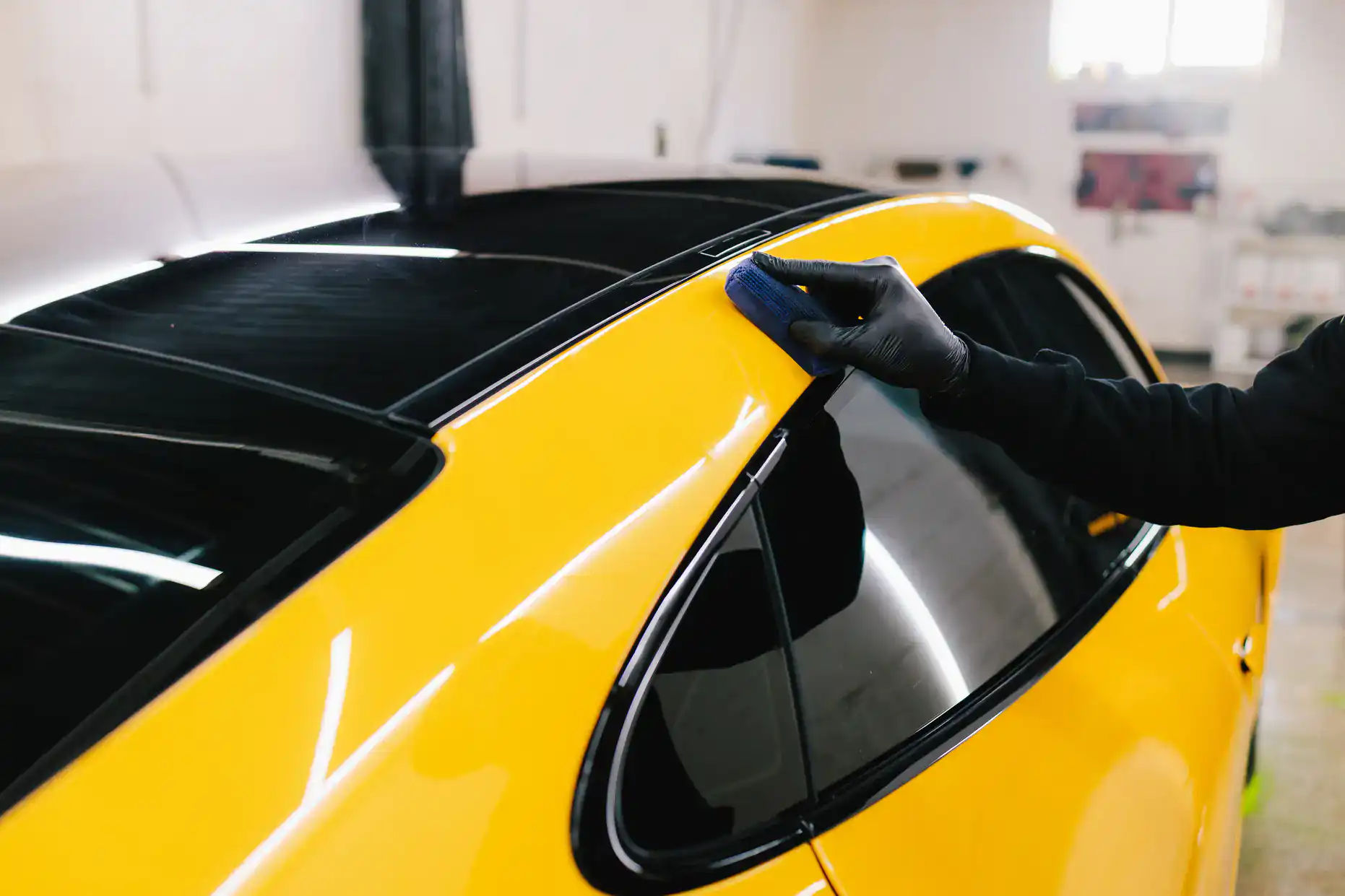
Then we apply the nano ceramic coating in controlled sections, allowing proper flash time between layers. The 9H-rated formula chemically bonds to your clear coat and cures into a semi-permanent protective layer. We finish with wheels, glass, and trim if you’ve selected those add-ons.
The entire process takes several hours depending on your vehicle’s size and condition. We don’t rush it. You’re paying for long-term paint protection, and that requires precision during application.
You get professional-grade nano ceramic coating applied to all painted surfaces—hood, roof, doors, fenders, bumpers, trunk. The hydrophobic protection creates that glass-like finish you’ve seen on high-end vehicles, plus the water-beading effect that makes maintenance easier.
We include a full decontamination wash, clay bar treatment, and single-stage paint correction to remove light imperfections. If your paint needs heavier correction, we’ll discuss that before starting so there are no surprises.
Lake Magdalene’s climate is tough on vehicles. You’re dealing with UV index levels that peak above 10 in summer, plus salt air drifting in from Tampa Bay, plus afternoon storms that leave water spots if your paint isn’t protected. Traditional wax breaks down in weeks under these conditions. Ceramic coating lasts 12 months minimum, with premium packages protecting for 3-5 years depending on maintenance.
Military members, first responders, and seniors receive specialized discounts. We also offer new customer pricing because we’d rather earn your long-term business than maximize profit on a single job.
How long does ceramic coating actually last in Florida weather?
Entry-level ceramic coatings last 12-18 months in Florida’s climate if you maintain them correctly. Mid-tier options push 2-3 years. Premium 9H formulas can protect for 5+ years, but that assumes you’re washing regularly and not letting contaminants sit on the surface.
Florida accelerates coating breakdown because of constant UV exposure and humidity. You’re not getting the same lifespan here as someone in a milder climate. That’s why we’re honest about maintenance requirements upfront—you need to wash your vehicle every 2-3 weeks and avoid automatic car washes with harsh brushes.
The coating doesn’t fail suddenly. It gradually loses hydrophobic properties as the top layer wears. You’ll notice water doesn’t bead as tightly, and dirt starts sticking more. That’s your signal to schedule an inspection or reapplication.
Is ceramic coating worth the cost compared to regular waxing?
If you’re currently waxing every 3-4 months, you’re spending $400-600 annually plus your time. Ceramic coating costs more upfront—often $800-1,200 depending on your vehicle—but lasts years instead of months. The math works if you plan to keep your vehicle longer than two years.
The bigger value is protection. Wax sits on top of your paint and washes away. Ceramic coating bonds chemically to the clear coat and becomes part of the surface. It blocks UV rays that cause fading, repels contaminants that etch into paint, and prevents oxidation that makes your vehicle look dull.
You’re also protecting resale value. A vehicle with maintained ceramic coating shows better than one with worn, faded paint. Buyers notice the difference immediately, and that translates to higher offers when you’re ready to sell.
Can you apply ceramic coating over existing scratches or swirl marks?
We can, but we don’t recommend it. Ceramic coating is transparent—it doesn’t fill or hide imperfections. If your paint has scratches, swirl marks, or oxidation, the coating will lock in that appearance and actually make flaws more visible because of the added gloss.
That’s why paint correction happens before coating application. We polish out the imperfections first so you’re sealing smooth, clean paint. Light scratches and swirls usually come out with single-stage correction, which is included in our standard service.
Deeper scratches that go through the clear coat need more aggressive correction or might be permanent. We’ll assess your paint during the initial wash and let you know what’s realistic. Some customers choose to coat their vehicle as-is to prevent further damage, then address scratches later. That’s a valid approach if your budget doesn’t allow for full correction right now.
Do I still need to wash my car after ceramic coating?
Yes. Ceramic coating makes washing easier and less frequent, but it doesn’t eliminate the need entirely. Dirt, pollen, bird droppings, and other contaminants still land on your vehicle—they just don’t bond to the paint as aggressively.
You’ll wash every 2-3 weeks instead of weekly, and the process takes half the time because dirt rinses off without scrubbing. Use pH-neutral soap and microfiber towels. Avoid automatic car washes with brushes that can mar the coating over time.
The coating’s hydrophobic properties mean water sheets off during rain, taking loose dirt with it. That’s why coated vehicles look cleaner longer between washes. But anything that sits on the surface—tree sap, bug splatter, bird droppings—should be removed within a few days to prevent etching.
How soon can I wash my car after ceramic coating application?
Wait 7 days before the first wash. The coating needs that time to fully cure and harden into its final protective state. During this week, avoid rain if possible, don’t park under trees, and keep the vehicle garaged or covered.
If something lands on your paint during the curing period—bird droppings, tree sap—you can gently remove it with a damp microfiber towel. Don’t spray the vehicle down or use soap. Just spot-clean the affected area and let the coating continue curing.
After the first week, you can resume normal washing. The coating will continue hardening for about 30 days total, but it’s safe to wash after seven. We’ll give you specific care instructions when we finish the application, including which products work best with your particular coating formula.
Does ceramic coating protect against rock chips and scratches?
No. Ceramic coating adds a protective layer measured in microns—it’s not thick enough to absorb impact from rocks or prevent scratches from physical contact. You’re getting chemical and UV protection, not impact protection.
If you want rock chip protection, you need paint protection film (PPF), which is a thicker, self-healing urethane layer applied to high-impact areas like the hood, bumper, and fenders. Some customers do both—PPF on vulnerable areas and ceramic coating everywhere else.
What ceramic coating does prevent is damage from contaminants. Bird droppings won’t etch into your clear coat. Brake dust won’t bond to your wheels. Tree sap wipes off without leaving residue. UV rays won’t fade your paint. Those are the threats that cause the most long-term damage in Lake Magdalene’s environment, and that’s what the coating is designed to stop.