Mobile ceramic coating that comes to your driveway in Northdale. Real protection against Florida’s sun, lovebugs, and everything else trying to ruin your paint.
"I had my car treated with the ceramic coating and paint protection film from TIMO Detailing Services, and I couldn't be happier. The team was professional, efficient, and took the time to explain the process. My car looks amazing, and I no longer worry about minor scratches or bird droppings damaging my paint. Highly recommend!"
John D.
"I’m beyond impressed with the mobile detailing service I received from TIMO Detailing. They came to my home and worked on my SUV while I was at work. When I came back, it looked brand new inside and out. They really pay attention to the details and it’s clear they use high-quality products."
Sarah M.
"I’ve had my car detailed multiple times, but nothing compares to the quality of service provided by TIMO Detailing Services. Their paint protection film is top-notch and really helps protect my vehicle from the harsh elements. The team was courteous and thorough, and my car has never looked better."
Michael P.
"TIMO Detailing Services did a phenomenal job on my boat! The team applied a protective coating that made a huge difference, keeping the surfaces clean and easy to maintain. Plus, the shine is incredible. They’re definitely the go-to for all your detailing needs!"
Rachel F.
"I just had my RV detailed by TIMO Detailing Services, and the results exceeded my expectations. They treated both the interior and exterior, and everything looks fantastic. It’s like having a brand new RV again. I appreciate the attention to detail, especially when it comes to hard-to-reach areas."
James L.
"TIMO Detailing Services is the best in the business! I had their mobile detailing team come to my workplace and clean my car while I was in meetings. The entire experience was so easy and the results were amazing. My car hasn’t looked this good in years. I’ll definitely be a repeat customer."
Sophia G.
"I’ve tried a lot of different detailing services over the years, but TIMO Detailing Services stands out. Their customer service was top-notch, and the team went above and beyond to ensure my car was spotless. I opted for their ceramic coating service, and it made the paint on my car look like glass!"
David H.
"I cannot say enough good things about TIMO Detailing Services. They applied paint protection film to my luxury car, and the results are amazing. The film is invisible, and it has kept my vehicle’s paint free from chips and scratches. It’s a game-changer for maintaining my car’s value."
Olivia W.
"What an incredible experience! I had TIMO Detailing Services apply ceramic coating to my truck, and I’m so impressed. The process was quick, the team was professional, and the finish is just stunning. The hydrophobic properties make washing so much easier, and the car stays clean much longer."
Lucas B.
"TIMO Detailing Services did a fantastic job detailing the interior of my car. The team was thorough, cleaning every corner, vacuuming every surface, and conditioning the leather seats. I can’t believe how refreshed my car looks and smells! I will definitely be using them for regular maintenance."
Ella S.
"I had my motorcycle detailed by the team at TIMO Detailing Services, and I’m so happy with the results. They applied paint protection film and gave the bike a full exterior clean. The shine is amazing, and I don’t have to worry about scratches or chips anymore. Highly recommend them for any vehicle!"
George T.
"TIMO Detailing Services exceeded all my expectations. The mobile detailing team arrived on time, was incredibly professional, and did an amazing job. My car looks brand new again, both inside and out. They really take pride in their work, and it shows. I will be recommending them to all my friends and family."
Charlotte R.
Professional Ceramic Coating Northdale, FL
What Happens When Your Paint Actually Stays Protected
You stop waxing every few months. That’s the first thing you’ll notice.
Ceramic coating creates a permanent bond with your paint that lasts years, not weeks. Water beads off like you just detailed it yesterday. Dirt doesn’t stick the way it used to. When lovebugs hit your hood during season, they wash right off instead of etching into your clear coat under the Florida sun.
Your car stays cleaner between washes. When you do wash it, the process takes half the time because contaminants slide off the hydrophobic surface instead of bonding to bare paint. You’re not scrubbing. You’re rinsing.
The shine doesn’t fade after a month. It doesn’t dull out after summer. The 9H hardness nano ceramic coating provides a glass-like layer that maintains that deep, glossy finish you got the day we applied it. Florida’s UV rays, humidity, and heat don’t break down professional-grade ceramic protection the way they destroy wax and paint sealant alternatives.
This is long-term paint protection. Not a temporary fix.
Mobile Ceramic Coating Northdale Experts
We've Been Doing This Since 2020
Timo Detailing Services started during COVID when most businesses were closing. We built this company on mobile convenience and refusing to rush jobs just to move on to the next one.
We’re fully insured and certified. We only use professional-grade products because we’ve seen what happens when shops cut corners with cheaper coatings. They fail. Then you’re paying someone else to strip it and start over.
We serve Northdale and the surrounding Tampa Bay area, but we keep our service radius tight. That’s intentional. It means we’re not spending your money on gas driving 60 miles. It means we show up on time. It means we’re part of the same community dealing with the same lovebugs, the same summer storms, the same tree sap from the same oaks.
You’re not getting a national chain. You’re getting someone who knows what your car faces every day in Florida.
How Ceramic Coating Application Works
Here's What Actually Happens During the Process
We start with a full decontamination wash. If your paint isn’t completely clean, the coating won’t bond correctly. We’re talking iron removal, clay bar treatment, the works. Every bit of tar, sap, and embedded contamination comes off first.
Next comes paint correction if needed. Most vehicles have swirl marks, light scratches, or oxidation. We’re not sealing that in. We polish the paint until it’s smooth and defect-free because the ceramic coating is going to lock in whatever’s underneath it.
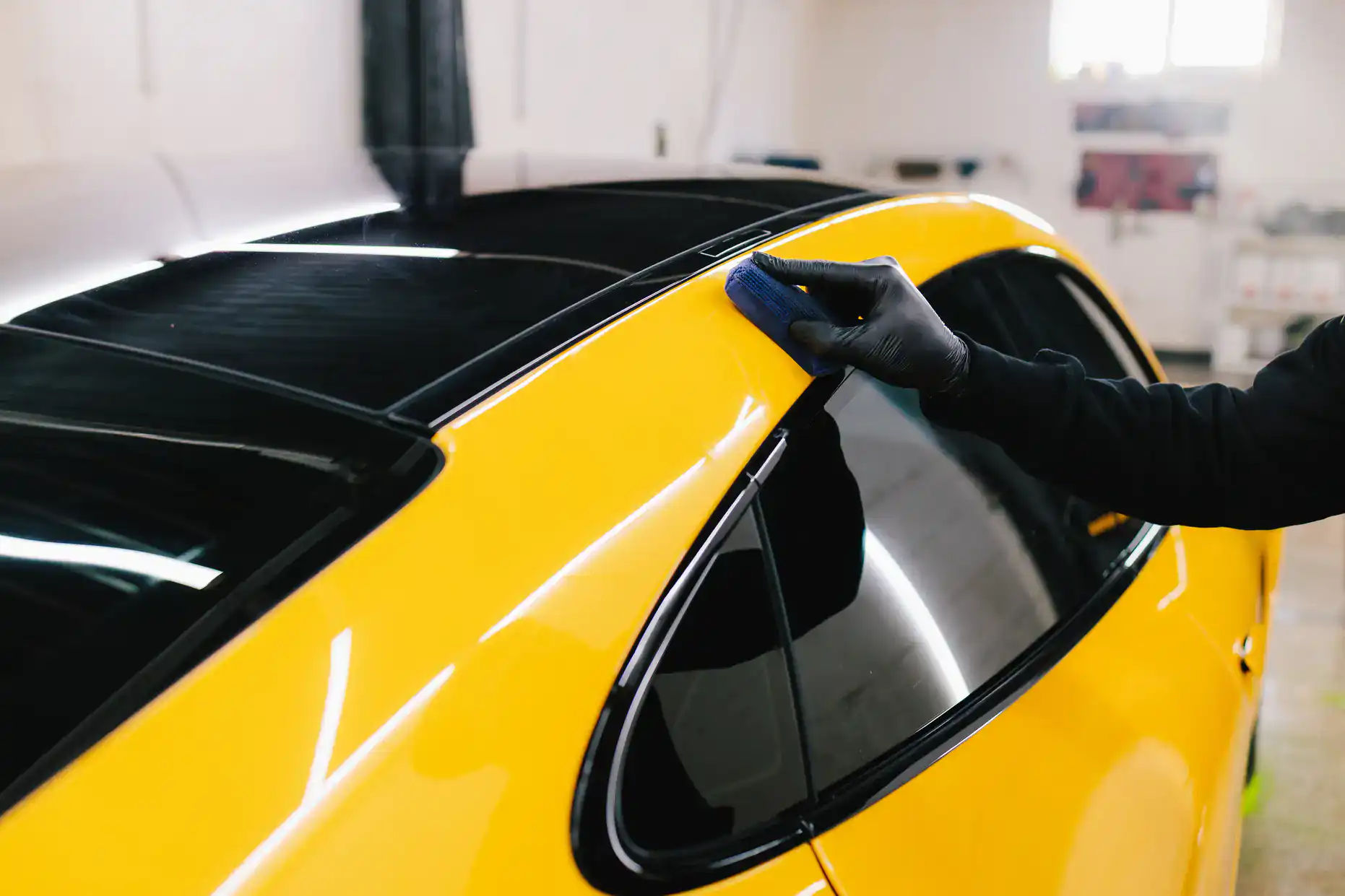
Then we apply the nano ceramic coating panel by panel. This isn’t a spray-and-wipe product. It’s a chemical bond that requires precise application and curing time. We work in controlled conditions, usually in your garage or a shaded area, because temperature and humidity affect how the coating cures.
After application, the coating needs time to cure fully. You’ll see the hydrophobic properties immediately, but the full hardness develops over several days. We’ll walk you through exactly what to avoid during that curing window.
The whole process takes several hours. We don’t rush it. You’re paying for protection that lasts years, and that requires doing it right the first time.
You’re getting a permanent protective layer that bonds to your paint at the molecular level. This isn’t a coating that washes away. It’s a 9H hardness barrier that resists scratches, chemical etching, and UV damage.
The hydrophobic protection means water doesn’t just bead—it sheets off, taking dirt and contaminants with it. In Northdale, where afternoon thunderstorms hit almost daily in summer, that matters. Your car self-cleans to a degree. Bird droppings, bug splatter, and tree sap don’t bond to the surface the way they do on unprotected paint.
Florida’s sun is brutal. UV rays oxidize and fade paint faster here than almost anywhere else in the country. Professional ceramic coating includes UV inhibitors that prevent that breakdown. Your paint stays vibrant instead of turning chalky and dull.
This is a paint sealant alternative that actually works long-term. Sealants last a few months if you’re lucky. Wax lasts even less. Ceramic coating lasts years because it’s not sitting on top of your paint—it’s chemically bonded to it. You’re done reapplying products every season.
We bring everything to your location. You don’t drive anywhere. You don’t wait at a shop. We come to your driveway in Northdale, do the work, and you’re done.
How long does ceramic coating actually last on a car in Florida?
Professional-grade ceramic coating lasts between three to five years in Florida with proper maintenance. That’s significantly longer than wax, which breaks down in weeks, or sealants, which might give you a few months.
Florida’s climate is tough on everything. The UV exposure here is intense, humidity stays high, and environmental contaminants like lovebugs and tree sap are constant. Ceramic coating is specifically designed to handle these conditions because it forms a permanent chemical bond with your clear coat.
The longevity depends partly on how you maintain it. You still need to wash your car, but you’re not reapplying protection every few months. The coating doesn’t wash away. It doesn’t degrade from sun exposure the way traditional products do. You might notice the hydrophobic properties become slightly less dramatic after a couple years, but the protective layer itself remains intact.
If you want it to last the full five years, avoid automatic car washes with harsh brushes. Hand wash or touchless only. Don’t use waxes or sealants on top of the coating—they’ll just sit on the surface and reduce the hydrophobic effect.
Does ceramic coating really protect against lovebug damage?
Yes, but you still need to wash them off relatively quickly. Ceramic coating doesn’t make lovebugs bounce off your car, but it does make them significantly easier to remove before they cause permanent damage.
Lovebugs are acidic. When they splatter on your hood and bake in the Florida sun, that acid etches into your clear coat. Once that happens, you’re looking at paint correction or worse. Ceramic coating creates a barrier that prevents the acid from reaching your paint.
The hydrophobic surface also means the bug splatter doesn’t bond as aggressively. When you wash your car, they rinse off with light pressure instead of requiring aggressive scrubbing that creates swirl marks. During lovebug season in May and September, this makes a massive difference.
You’re not invincible. If you leave dead lovebugs on your hood for a week in the sun, even ceramic coating has limits. But if you rinse your car every few days during peak season, the coating does exactly what it’s supposed to—it keeps contaminants from bonding to your paint and gives you time to clean them off safely.
What's the difference between ceramic coating and wax?
Wax sits on top of your paint and washes away. Ceramic coating bonds to your paint and stays there. That’s the fundamental difference.
Wax is a temporary sacrificial layer. It provides some shine and minor protection, but it breaks down from UV exposure, heat, and washing. In Florida, you’re reapplying wax every four to six weeks if you want continuous protection. That’s time and money adding up constantly.
Ceramic coating is a semi-permanent solution. Once applied, it doesn’t wash off. It creates a hard, glass-like layer with 9H hardness that resists scratches, chemical etching, and environmental damage. The protection lasts years, not weeks.
Wax gives you some water beading. Ceramic coating gives you extreme hydrophobic properties where water and dirt actively slide off the surface. Wax might make your car look good for a few weeks. Ceramic coating maintains that showroom shine for years because it’s not degrading every time it rains.
The cost difference reflects the durability difference. Wax is cheap because you’re buying it over and over. Ceramic coating costs more upfront because you’re paying once for years of protection.
Can I apply ceramic coating myself or should I hire a professional?
You can buy DIY ceramic coating products, but the results aren’t comparable to professional application. The difference comes down to paint preparation, product quality, and application technique.
Most people skip proper paint correction before applying DIY coatings. If your paint has swirl marks, scratches, or contamination, the coating seals those imperfections in permanently. Professional application includes full decontamination and paint correction so you’re coating smooth, clean paint.
Consumer-grade ceramic coatings aren’t the same as professional products. They’re formulated to be more forgiving during application, which means they don’t bond as strongly or last as long. Professional coatings require specific environmental conditions and curing times that are difficult to replicate in a driveway without experience.
Application technique matters. If you apply it unevenly, cure it incorrectly, or contaminate the surface during the process, you’ll get high spots, streaking, or premature failure. Fixing a bad ceramic coating job often costs more than hiring a professional in the first place because the coating has to be polished off before reapplication.
If you want protection that actually lasts and looks right, professional application is worth it. You’re paying for the prep work, the product quality, and the experience to do it correctly.
How much does professional ceramic coating cost in Northdale?
Professional ceramic coating typically ranges from $800 to over $1,500 depending on your vehicle size, paint condition, and the level of paint correction needed before application.
A small sedan in good condition with minimal paint defects will cost less than a large SUV with oxidized paint that needs significant correction. The coating itself is only part of the cost. You’re paying for decontamination, clay bar treatment, polishing, and the labor to apply the coating correctly.
Some shops offer different tiers of ceramic coating with varying durability and warranty periods. Entry-level coatings might last three years. Premium coatings with stronger chemical resistance and longer warranties cost more but last five years or longer.
Mobile ceramic coating services like ours often cost slightly more than shop-based services because we’re bringing professional equipment and controlled conditions to your location. You’re paying for convenience and not having to leave your car somewhere for a day or two.
The cost looks high compared to a $20 bottle of wax. But when you calculate what you spend on wax, sealants, and frequent detailing over three to five years, ceramic coating is actually cheaper long-term. Plus you’re getting significantly better protection and results.
What maintenance does ceramic coating require after application?
Ceramic coating isn’t maintenance-free, but the maintenance is easier and less frequent than traditional protection methods. You still need to wash your car regularly, but the process is faster and simpler.
Wash your car every two weeks, or more often if you drive daily. Use pH-neutral car soap—nothing with waxes, glosses, or harsh degreasers that can leave residue on the coating. The hydrophobic surface means dirt slides off easily, so you’re not scrubbing. You’re rinsing.
Avoid automatic car washes with brushes. The brushes create micro-scratches that dull the coating over time. Touchless car washes are fine. Hand washing is better. If you’re washing it yourself, use the two-bucket method and microfiber towels to prevent contamination.
You don’t need to wax or seal the coating. In fact, you shouldn’t. Those products just sit on top of the ceramic coating and reduce its hydrophobic properties. The coating is the protection. Nothing else needs to go on top of it.
Once or twice a year, consider a professional decontamination wash to remove any bonded contaminants the coating couldn’t repel. This keeps the surface performing at its best. Some people also apply a ceramic boost spray every few months to enhance the water beading, but it’s not required for the coating to work.