Florida Sun Destroys Paint. Ceramic Coating Stops It.
Your car faces relentless UV damage, salt air, and acidic bird droppings every day in Riverview. Ceramic coating services give you years of hydrophobic protection without the constant waxing.
"I had my car treated with the ceramic coating and paint protection film from TIMO Detailing Services, and I couldn't be happier. The team was professional, efficient, and took the time to explain the process. My car looks amazing, and I no longer worry about minor scratches or bird droppings damaging my paint. Highly recommend!"
John D.
"I’m beyond impressed with the mobile detailing service I received from TIMO Detailing. They came to my home and worked on my SUV while I was at work. When I came back, it looked brand new inside and out. They really pay attention to the details and it’s clear they use high-quality products."
Sarah M.
"I’ve had my car detailed multiple times, but nothing compares to the quality of service provided by TIMO Detailing Services. Their paint protection film is top-notch and really helps protect my vehicle from the harsh elements. The team was courteous and thorough, and my car has never looked better."
Michael P.
"TIMO Detailing Services did a phenomenal job on my boat! The team applied a protective coating that made a huge difference, keeping the surfaces clean and easy to maintain. Plus, the shine is incredible. They’re definitely the go-to for all your detailing needs!"
Rachel F.
"I just had my RV detailed by TIMO Detailing Services, and the results exceeded my expectations. They treated both the interior and exterior, and everything looks fantastic. It’s like having a brand new RV again. I appreciate the attention to detail, especially when it comes to hard-to-reach areas."
James L.
"TIMO Detailing Services is the best in the business! I had their mobile detailing team come to my workplace and clean my car while I was in meetings. The entire experience was so easy and the results were amazing. My car hasn’t looked this good in years. I’ll definitely be a repeat customer."
Sophia G.
"I’ve tried a lot of different detailing services over the years, but TIMO Detailing Services stands out. Their customer service was top-notch, and the team went above and beyond to ensure my car was spotless. I opted for their ceramic coating service, and it made the paint on my car look like glass!"
David H.
"I cannot say enough good things about TIMO Detailing Services. They applied paint protection film to my luxury car, and the results are amazing. The film is invisible, and it has kept my vehicle’s paint free from chips and scratches. It’s a game-changer for maintaining my car’s value."
Olivia W.
"What an incredible experience! I had TIMO Detailing Services apply ceramic coating to my truck, and I’m so impressed. The process was quick, the team was professional, and the finish is just stunning. The hydrophobic properties make washing so much easier, and the car stays clean much longer."
Lucas B.
"TIMO Detailing Services did a fantastic job detailing the interior of my car. The team was thorough, cleaning every corner, vacuuming every surface, and conditioning the leather seats. I can’t believe how refreshed my car looks and smells! I will definitely be using them for regular maintenance."
Ella S.
"I had my motorcycle detailed by the team at TIMO Detailing Services, and I’m so happy with the results. They applied paint protection film and gave the bike a full exterior clean. The shine is amazing, and I don’t have to worry about scratches or chips anymore. Highly recommend them for any vehicle!"
George T.
"TIMO Detailing Services exceeded all my expectations. The mobile detailing team arrived on time, was incredibly professional, and did an amazing job. My car looks brand new again, both inside and out. They really take pride in their work, and it shows. I will be recommending them to all my friends and family."
Charlotte R.
Professional Ceramic Coating Riverview, FL
What You Get: Protection That Actually Lasts
Wax wears off in weeks. Paint sealant might give you a few months. Nano ceramic coating bonds to your paint at the molecular level and stays there for years.
That means water beads and rolls off instead of sitting on your hood forming spots. Bird droppings and tree sap wipe away before they etch into your clear coat. Your paint stays glossy instead of fading to that chalky, oxidized look you see on every third car in Florida.
You’re not just protecting your vehicle’s appearance. You’re protecting its value. Riverview’s heat and humidity accelerate paint degradation faster than almost anywhere else in the country. A properly applied ceramic coating is the difference between a car that looks five years old after two years and one that still turns heads at trade-in time.
This isn’t a detail job you repeat every few months. It’s long-term paint protection that works while you’re not thinking about it.
Mobile Ceramic Coating Riverview, FL
We Come to You, Not the Other Way Around
We’ve been serving Riverview since 2020. We’re a mobile detailing company, which means you don’t lose half a day dropping off your car and waiting around.
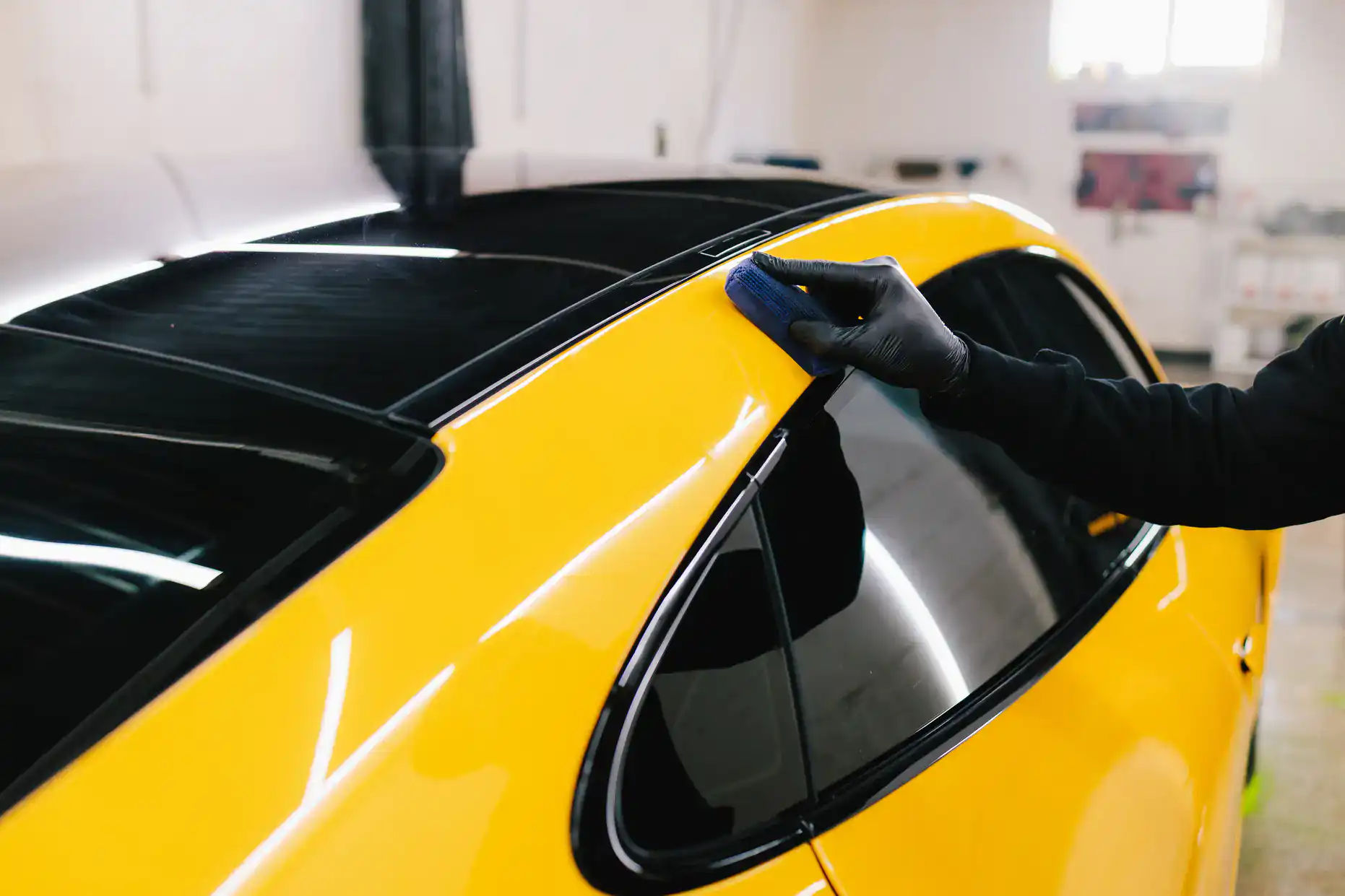
We show up where you are—your driveway, your office, wherever works. You go about your day. We handle the prep work, paint correction if needed, and professional ceramic coating installation. When we’re done, your vehicle is protected and you didn’t have to rearrange your schedule.
We’re fully insured and certified. We focus on a tight service radius around Riverview because we’d rather spend time on your car than burning gas on the highway. That focus means better availability, faster response, and attention to the details that matter when you’re investing over $1,000 in paint protection.
How Ceramic Coating Works Riverview
The Process: Prep, Correction, Protection
Ceramic coating only works if the surface is perfect before application. We start with a full decontamination wash to remove embedded dirt, brake dust, and industrial fallout that regular washing misses.
Next comes paint correction. If your clear coat has swirl marks, light scratches, or oxidation, we address that before any coating goes on. The coating magnifies whatever’s underneath it, so this step matters more than most people realize.
Once the paint is flawless, we apply the ceramic coating in controlled conditions. Temperature and humidity affect curing, so we monitor both. The coating bonds chemically to your paint and hardens to a 9H surface that resists scratches, UV rays, and chemical etching.
After curing, you get hydrophobic protection that lasts years depending on the product tier you choose. Some coatings we install are warrantied for five to seven years. A few exceed ten with proper maintenance. And because we use products that work with CarFax, your coating can be officially documented and add value when you sell or trade.
You’re getting a multi-layer defense system. The ceramic coating shields against UV-ray fading, which is critical in Riverview where the UV index regularly hits 9 or 10. That’s classified as “very high” to “extreme” and it’s why unprotected cars fade so fast here.
You’re also protected from salt air corrosion. If you’re near the coast or even just dealing with Florida’s humidity and occasional saltwater storms, that corrosive mix attacks your paint 24/7. Ceramic coating creates a barrier that prevents salt from bonding to your clear coat.
Bird droppings are acidic—pH between 3 and 4.5. When the sun bakes that acid into your paint, it etches permanently. With hydrophobic protection, droppings bead up and rinse off before they cause damage. Same with tree sap, bug splatter, and road tar.
And here’s the part that saves you time: you never need to wax again. The coating is the finish. Wash your car when it’s dirty, and it’ll look freshly detailed every time because dirt doesn’t stick to the hydrophobic surface. That’s the paint sealant alternative people switch to once they realize how much easier maintenance becomes.
How long does ceramic coating last on a car in Florida?
It depends on the product tier, but expect anywhere from two to ten years with proper maintenance. Most mid-tier professional ceramic coatings last five to seven years in Florida’s climate.
The key word is “proper maintenance.” That means regular washing to remove contaminants before they sit on the surface too long, and avoiding automatic car washes with harsh brushes that can degrade the coating over time. Hand washing or touchless washes are your best bet.
Florida’s intense UV and heat do put more stress on coatings than milder climates, but quality nano ceramic coatings are specifically formulated to handle it. Some manufacturers even produce Florida-specific formulations designed by people who understand what vehicles face here. If someone tells you a coating will last forever with zero maintenance, they’re overselling. But seven years of solid protection with minimal effort? That’s realistic and worth the investment.
Is ceramic coating worth it compared to regular waxing?
If you’re waxing your car yourself every month, you’re spending 12-plus hours a year on something that washes off in the rain. If you’re paying someone else to do it, you’re spending hundreds of dollars annually for protection that lasts weeks at best.
Ceramic coating is a one-time investment that eliminates that cycle entirely. You pay once, and you’re covered for years. The coating doesn’t wash off. It doesn’t break down after a few rainstorms. It’s chemically bonded to your paint, so it’s there until it gradually wears down from friction over several years.
Beyond convenience, the protection level isn’t even comparable. Wax sits on top of your paint and offers minimal defense against UV rays, acidic contaminants, or scratches. Ceramic coating hardens to a 9H surface, repels water and chemicals, and actively prevents the kind of damage that kills resale value. If you plan to keep your car for more than a couple years or you care about what it’s worth when you sell it, ceramic coating pays for itself.
Can ceramic coating be applied to any vehicle?
Yes. Cars, trucks, SUVs, RVs, boats, motorcycles—if it has a painted or gel-coated surface, it can be ceramic coated. The process is the same regardless of vehicle type: decontamination, correction if needed, and coating application.
That said, the condition of your paint matters more than the type of vehicle. If your clear coat is severely damaged, oxidized, or failing, ceramic coating won’t fix that. It’ll lock in whatever’s underneath. That’s why paint correction is part of the process for older vehicles or anything that’s been neglected.
For newer vehicles, the process is faster because there’s less correction work. For older ones, we might spend more time on prep to get the surface right. Either way, the end result is the same: a protected, glossy finish that holds up to Florida’s environment. And because we’re mobile, we can handle everything from a sedan in your driveway to an RV at your storage facility without you having to figure out logistics.
What's the difference between ceramic coating and paint protection film?
Paint protection film (PPF) is a thick, clear urethane layer that’s applied to high-impact areas like the hood, bumper, and mirrors. It’s designed to absorb rock chips and prevent physical damage. Ceramic coating is a liquid polymer that bonds to your paint and hardens into a thin protective layer.
PPF is better for preventing chips and scratches from road debris. Ceramic coating is better for chemical resistance, UV protection, and hydrophobic properties. A lot of people do both—PPF on the front end where rocks hit, and ceramic coating over the entire vehicle including the PPF itself.
If your main concern is rock chips from highway driving, PPF makes sense. If you’re more worried about Florida sun, bird droppings, water spots, and keeping your paint looking new without constant maintenance, ceramic coating is the right move. For maximum protection, combine them. But if budget only allows one, ceramic coating gives you broader coverage and handles the environmental threats that actually cause the most damage in Riverview’s climate.
How much does professional ceramic coating cost in Riverview?
Professional ceramic coating services typically range from $500 to $3,000 depending on the size of your vehicle, the condition of your paint, and the coating product you choose. A basic sedan with paint in good shape might be on the lower end. A larger SUV or truck that needs paint correction before coating will cost more.
Premium coatings with longer warranties and better performance cost more upfront but last longer and offer stronger protection. Some of the top-tier products we use are warrantied for seven-plus years and are CarFax certified, meaning the coating is documented and adds value to your vehicle history.
We’re not the cheapest option in the area, and that’s intentional. You’re paying for proper surface prep, professional-grade products, and installation by someone who’s been doing this since 2020. Cheap ceramic coating usually means rushed prep work, low-quality product, or both. That leads to coatings that fail early, peel, or don’t bond correctly. When you’re spending four figures on paint protection, the last thing you want is to redo it in a year because someone cut corners. We take the time to do it right so the coating actually lasts as long as it’s supposed to.
Do I still need to wash my car after ceramic coating?
Yes, but it’s easier and you’ll need to do it less often. The hydrophobic surface means dirt, water, and grime don’t stick the way they do on uncoated paint. When you do wash, contaminants rinse off with minimal effort.
You’re not washing to protect the paint anymore—the coating handles that. You’re washing to keep the coating clean so it continues performing. If you let contaminants sit for weeks, they can still bond to the coating and reduce its hydrophobic effect over time.
Most people find they wash half as often as before because the car stays cleaner longer. When they do wash, it takes half the time because everything slides right off. Avoid automatic brush washes that can scratch the coating. Stick with hand washing or touchless systems. Use a pH-neutral soap—nothing with harsh degreasers or wax additives. That’s it. No waxing, no sealing, no clay bar treatments every few months. The coating is doing all that work for you. Just keep it clean and it’ll keep your paint protected for years.